

Prehung Doors v. Slab Doors
There are two major types of door installations: prehung doors and slab doors. While they’re both excellent choices and can update and transform your home, it’s good to know more about each door and discover which one is perfect for you.
Prehung Doors

Prehung doors are already in their own frame and install all at once. These doors are ideal for a new construction, replacement of a damaged door frame or a home requiring a weather-tight door. In addition to the frame, prehung doors also come with hardware, hinges and a pre-cut door knob hole. Because they’re pre-assembled, a prehung door is easier to install (although it takes two people to handle the door because of its weight) and takes less time than a slab door.
Use our tips and tricks to paint a front door.
Learn how to install a prehung exterior door.
Slab Doors

Slab doors are just the door by itself — no hinges, knobs or a frame. A fraction of the cost of prehung doors, a slab door is the choice when you want more design flexibility or if you’re only installing one or two doors. With a slab door, you’ll need to purchase a metal strike plate, shims and mortises along with hinges and a doorknob. Slab doors are lighter than a prehung door and cost less, too, making them a budget-friendly option.
Purchase your entry or patio door from Lowe's and we can install it for you. Just submit your information request and we'll connect you with an expert that'll take measurements and provide a quote.


How to Measure for a New Door

Your door size is based on three measurements:
- Height of the rough opening
- Width of the rough opening
- Jamb depth
To accurately measure for a new door, consider the following before pulling out the tape measure:
- Rough openings frame the door opening and are generally 2 inches wider and taller than the door being installed.
- The size of the door jamb is the width of the frame from back to front as it meets the wall stud of your house.
- The net frame dimension is the full measurement of the width of the door frame.
Standard Exterior Doors

The standard and most common size for an exterior or front door is 36 inches wide by 80 inches. However, there are a few other common dimensions for exterior doors and they vary in width and height, from 30 to 42 inches and 80 to 96 inches, respectively.
Nominal Size Single Exterior Doors (width and height)
36 inches by 80 inches (standard)
30 inches by 80 inches (common on older homes)
32 inches by 80 inches
34 inches by 80 inches
36 inches by 96 inches (common for newer homes)
Rough opening for single doors should be 2-1/2 inches wider and 2 inches taller than the door.
Nominal Size Double Exterior Doors (width and height)
60 inches by 80 inches
68 inches by 80 inches
72 inches by 80 inches
Special-Order Doors

Custom or special-order exterior doors can be designed to fit your specific needs and can vary significantly depending on the type of door. With special-order doors, you can get features like extra width, custom hardware, decorative glass, etc.
Depending on the manufacturer, special-order door heights can range from 72 inches up to 96 inches or taller with widths up to 48 inches (for single doors).
Sizes reflected are for the door panels only, not the door frame.
Consider the Swing

Visualize yourself facing the door from the outside. Outswing doors open toward you, and inswing doors open away from you. Both swing options come with left- and right-handed configurations.
Here are the most popular terms when shopping for the door configuration.
Inswing (I/S): A door that opens inward.
Outswing (O/S): A door that opens outward.
Left Hand: An I/S door with hinges on the left or an O/S door with hinges on the right.
Right Hand: An I/S door with hinges on the right or an O/S door with hinges on the left.


Entry Door Materials
There's no shortage of front door styles and, overall, most entry doors perform equally well. But the materials they're made of — fiberglass, steel or wood — do have pros and considerations.
Whether you're looking for modern front doors, iron front doors, contemporary front doors, Craftsman-style front doors or even custom front doors, we can help you pick the front door designs, colors and accents you want.
Steel Front Doors

- Steel front doors often have tighter-fitting frames and energy-efficient core insulation.
- Some models use double- or triple-panel insulating glass to reduce heat transfer.
- Fully weatherstripped; highly resistant to shrinking, swelling and warping.
- Durable, steel construction requires little maintenance in harsh weather.
- Pre-drilled door knob and lockset hole options make them easier to install.
- Comes pre-primed and ready to paint.
- Typically have more insulating value than wooden doors.
Fiberglass Front Doors

- Fiberglass doors are easy to install.
- Work well in extreme climates and high-traffic entrances.
- Have similar energy-saving qualities as steel doors.
- Can be made with a grain texture to mimic the look of a real wood door.
- Usually have the longest warranties compared to wood and steel doors.
- Made of high-quality composite construction, they resist all sorts of weather, scratches and dents.
Wood Front Doors

- Wood front doors are heavy and sturdy with a more traditional look.
- Can be painted or stained for a natural, warm appearance.
- Wood species range from inexpensive composites to more costly fir or walnut.
- Work best when installed in a more protected or shaded area.
- The best wooden front doors generally are more intricate and thicker.
- Higher-end wooden door panels measure more than an inch thick, while economy models measure less than an inch thick.
- Frame and panel construction counteracts the effects of weather or seasonal changes.
Wrought Iron Entry Doors

- Also called iron entry doors, they're built to withstand the elements and are among the safest and most secure options for home entrances.
- Available in a variety of designs that can be customized to include different types of glass and hardware, such as handles and locks.
- Generally more expensive, they can be difficult to install and move because of their weight.
For maximum savings, look for ENERGY STAR® certified entry doors.


Additional Entry Door Options
Learn more about the other exterior door options, such as back doors, patio doors, screen doors, storm doors and more.
Patio Doors

The selection of patio doors, French doors and sliding glass doors is as diverse as their sizes. They range from about 5 to 13 feet.
French Patio Doors
French patio doors are typically made of steel, fiberglass or aluminum. They can be made with a left- or right-handed I/S, O/S so both doors open. They're available with or without brickmould stops, or trim, in the center.
Learn more about the differences between French doors and sliding glass doors.
Sliding Glass Doors
Sliding glass doors are available in the same materials as French patio doors. Aluminum doors are less expensive, won't rust and they're easy to maintain. Vinyl is also a low-maintenance and durable option built with low-emissive, insulated glass and factory-installed weatherstripping for maximum energy efficiency. If you want the look of real wood on the inside, choose clad-wood. They have a vinyl, fiberglass or aluminum coating on the outside to protect it from the elements.
Choose the right patio doors for your home.
Back & Dutch Doors

Back doors are available in similar sizes and materials to front doors. Choose from fiberglass, steel or wood back doors in single or double-door configurations. From traditional to modern, farmhouse to Craftsman, you can find a back exterior door to suit your home's style.
Dutch Doors
If you'd like to secure your pets while still getting some fresh air, consider a Dutch door. These doors are split in the middle, so that you can open the top half. They're typically made of solid wood and can be painted the color of your choice.
Screen, Storm & Security Doors

Screen Doors
Let the fresh air in and keep the bugs out with a screen door. Choose from a hinged screen door in numerous styles or purchase a retractable version that disappears into the wall when not in use. If you have cats or dogs, consider a screen door that has a built-in pet door.
Find out how to measure for a screen door.
Learn more about the differences between screen doors and storm doors.
Storm Doors
With a storm door, you can use the screens on nice days. When it's cold, you'll still get the natural light, but the heavy-duty weatherstripping and tempered glass keeps the chill out. Choose from aluminum or wood-core storm doors.
Learn how to install a storm door.
Learn more about storm doors in our buying guide.
Security Doors
An aluminum or steel security door with steel mesh, tamper-resistant hinges and a heavy-duty lockset plate will provide an extra layer of protection to your home. They come in a wide array of colors and finishes to match your home's exterior.
Learn how to select the right security door for your home.


Entry Door Accents

There are many elements — including door design, material and hardware — that all work together to create a personal look to reflect your style.
Here are the types of hardware and accents that can add functionality and design to an entry door. Some can also help keep your front door secure.
Blinds Between the Glass
In-glass blinds make it easy to control privacy and control the amount of natural light a door allows in.
Brickmould
Moulding used around a door (or window) that fills the gap between where the door and the wall of the house meet.
Caming
Strips for joining segmented glass.
Deadbolt
A deadbolt lock provides added entry door security. For added convenience, consider an electronic deadbolt that allows keyless entry.
Divided Lite
Panes of glass that are divided or appear to be.
Door Knocker
A knocker gives your door an attractive look that can range from classic to modern. Options include brass, bronze, satin nickel and matte black.
Door Viewer
You might also call this feature a door peephole. Install an entry door viewer at a height all members of the family can reach.
Doorbell
Choose from a simple button style to a wireless, eight-note version with decorative interior chimes. You can also find video doorbells with built-in cameras for added peace of mind.
Front Door with Sidelites
Sidelites are glass panels that let natural light in and add an elegant look to a door. You can find doors with sidelites on the right or left and doors with sidelites on both sides.
Glass Styles & Shapes
You can customize some doors to include decorative glass. While many front doors have insulated glass for energy efficiency, others may have frosted glass, textured glass or privacy glass. Glass comes in several sizes, including full lite, half lite or 1/4 lite. Other options include doors with several lites and doors with oval lites.
Grille
Plastic, wooden or metal details that give the appearance of divided lites.
Handleset
A handleset, often part of a hardware package for either an exterior or the interior door, includes the lock cylinder, latch, strike plate and the handle, lever or knob.
Kick Plate
A metal kick plate attached to the bottom of the door protects the door finish from shoe scuff marks. It also gives the door a polished appearance.
Lite
A pane of glass in a door.
Panels
Panels give doors a more three-dimensional look. A recessed panel conveys traditional style. The six-panel door design is classic, but you can also find one-panel doors, two-panel doors and more.
Transom
This decorative accent above a set of front doors can add an elegant look.
There are numerous entry door accents that are easy to install. Follow these step-by-step instructions to do the following projects:
Install a deadbolt
Replace a handleset or lockset
Install a door viewer
Replace a doorbell button
Install a video doorbell camera


Let's Get Started
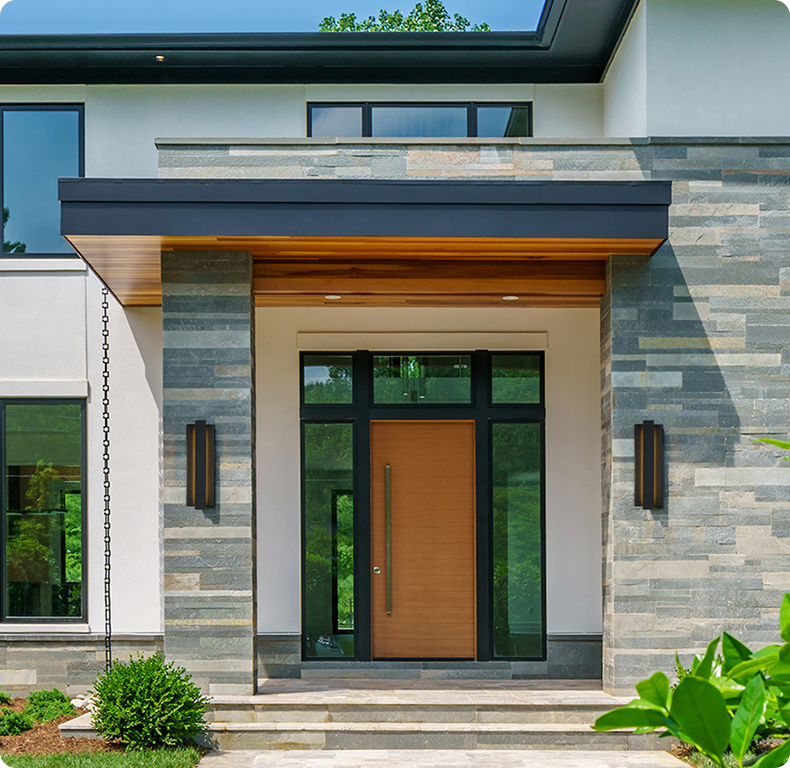
Whether you'd like to install a new prehung exterior door or slab entry door, they're both excellent choices that can update your home and add curb appeal.
Here are the major considerations when you're selecting an entry door.
Step 1: Measure the door opening.
Step 2: Determine how the door will open.
Step 3: Decide on the door material.
Step 4: Pick additional door accessories such as handlesets, lites, glass style, door knockers and more.
Step 5: Purchase your door and determine how it'll be installed.
We're Here to Help
Lowe's has thousands of entry doors to choose from. Shop online or visit your local Lowe's store. Then talk to one of our store associates about getting it installed.