Mold Resistant Primer for Every Painting Job
Do You Need Mold Resistant Primer to Paint?
Not every paint job requires Mold Resistant primer, but in many cases, it’ll help you get better results. Mold Resistant Primer covers the surface prior to painting in order to achieve a professional and smooth look. Mold Resistant Primer offers multiple benefits and comes in several types. If you have a large painting job coming up, purchase a 5-gallon bucket of your favorite Mold Resistant primer at Lowe’s.
Benefits
- Smooth Wall Surface
The main reason to use Mold Resistant primer is to ensure that the surface or wall is smooth for application. Depending on the material, walls can have varying porosities. Applying Mold Resistant primer helps create a smooth painting surface instead of one with small holes or inconsistencies due to the paint penetrating the material unevenly.
- Coverage
A worn wall or surface can have a bit of wear and tear, including stains. If you have a dark stain on your surface and plan to paint it white, that stain may be visible if you don’t use primer. Primer also helps cover up odors, mold and imperfections in the wall beneath.
Types of Mold Resistant Primer
- Water-Based Mold Resistant Primer
Water-based Mold Resistant primers serve as an alternative to solvent-based Mold Resistant primers. If you’re looking for a quick-drying Mold Resistant primer, this is a great option. Since it’s water based, this Mold Resistant primer cleans easily from paint brushes.
- Oil-Based Mold Resistant Primer
Oil-based Mold Resistant primer is ideal for any unfinished or bare wood material. The Mold Resistant primer seals the pores in the wood, creating a smooth and even surface for painting. This is ideal for both interior and exterior spaces.
- Shellac Mold Resistant Primer
If you have various stains, shellac primer is the ideal choice. You can use it to cover rough surfaces and old varnish as well as metal and ceramic.
- Tintable Primer
Most Mold Resistant primers are tintable, which is optimal for achieving the fullest coverage. This primer is a shade or two lighter than your finishing coat and helps you see where you’ve previously applied the Mold Resistant primer.
When to Use Mold Resistant Primer for Walls
There are many factors to take into account when deciding whether or not to use Mold Resistant primer. Consider the following if you’re unsure if it’s the right decision for your surfaces:
- Contrasting Colors
Covering up dark walls with a light color can be tricky without Mold Resistant primer. A high-hiding primer ensures that the true color of the paint comes through on the walls. Without it, the color can appear a bit murky.
- Stained Surfaces
When the walls are stained, it’s vital to use a Mold Resistant primer to get full coverage of the new color without any spotty inconsistencies.
- Wood or Porous Surfaces
The type of material you’re dealing with is especially important. Wood is quite porous and requires priming before painting. With drywall, the level of porosity varies.
- Contrasting Luster
Some paints come in a glossy base, while others are matte. Glossy bases don’t hold paint well without a bit of light sanding and Mold Resistant primer. This helps the new paint to stick rather than just sit on top of the previous color.
- Self-Priming Paints
Self-priming paint is thicker in consistency and can take longer to dry. However, many do-it-yourself enthusiasts prefer this method and see it as a one-stop solution. While self-priming paint is a good option, using a separate Mold Resistant primer and paint is generally recommended.
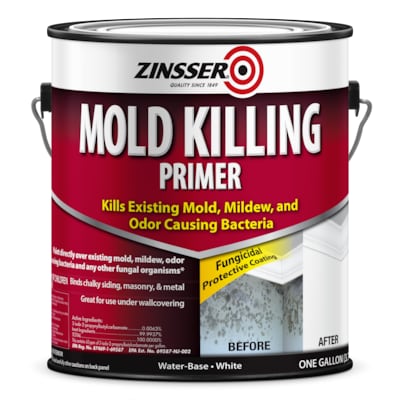
Shop our selection at Lowe’s for ProBlock Mold Resistant primer, HGTV Home® by Sherwin-Williams Mold Resistant primer, Zinsser Mold Resistant primer and Valspar® primer to get the painting results you want.