
Decorating With Plants
There are benefits to using real plants and artificial plants to achieve your desired look. Here are some pros and cons of different kinds of plants.
Living Plants
Living plants improve air quality and can reduce your stress levels and boost your productivity. Before buying any house plants, you should think about how much sunlight your space provides. South-facing windows are the best for direct sunlight, while north-facing windows are ideal for low-light plants. The amount of sunlight a plant needs depends on the variety. Some live plants can be toxic to children and pets and must be placed out of reach. It’s important to consider safety and sunlight requirements when finding an ideal spot for a living plant.
Artificial Plants
Unlike real house plants, artificial plants don’t improve air quality and you can’t watch them grow. However, there are many benefits to having artificial plants.
- Artificial plants won’t outgrow their containers, so you don’t have to worry about moving them around or repotting them as they grow.
- Artificial plants are ideal for homes with pets or small children because some house plants are toxic and can be harmful if ingested. You don’t have to worry about placing your artificial plants out of reach of children and pets.
- Artificial plants can be placed virtually anywhere in your home.
- Artificial plants don’t require watering or attract pests.
- Artificial plants look realistic and last for a long time if they’re made with high-quality materials.
Artificial plants are low maintenance, but you do need to clean them. It’s important to dust the plants regularly because dust and allergens can accumulate on them. The best method is to use a microfiber towel or duster to go over the leaves and large petals. To clean artificial flowers, place them in a bag that’s large enough to close around them. Pour a cup of kosher or rock salt over the flowers, close the bag and gently shake it. This will loosen any small debris and dust. You can also polish your plants if they’re made of plastic. Most artificial plants are made of polyester, but other materials such as plastic, rayon and silk are also used.
4 Artificial Plant Décor Ideas

Artificial plants are very versatile, so it’ll be easy to find a décor option that’s perfect for your home. Here are four home décor ideas for artificial plants:
Vining Plants
Adding vining foliage is a nice way to bring a classical feel into your home. Try adding faux vining plants to a high stairwell or mantel in the living room. String the vines along beams and canopies in the bedroom or hang them in the bathroom to make it feel like a fresh and lively oasis.
Centerpieces
You can use artificial plants as a centerpiece on a dining table or a side table. You don’t have to consider how much sunlight the area gets. You can just put your plants where you’d enjoy them most. When using artificial plants as a centerpiece, be sure to consider the flowerpot as well. The pot can add a pop of color while the artificial plant livens up the space.
Creating a Focal Point
Creating a focal point with artificial flowers can draw your guests in and make them feel more comfortable. This doesn’t mean the flowers have to be the centerpiece. You can use artificial plants to accent a bookcase or floating shelves and draw attention to items that represent you and your space. An artificial plant wall can also add visual interest to a room.
Hanging Plants
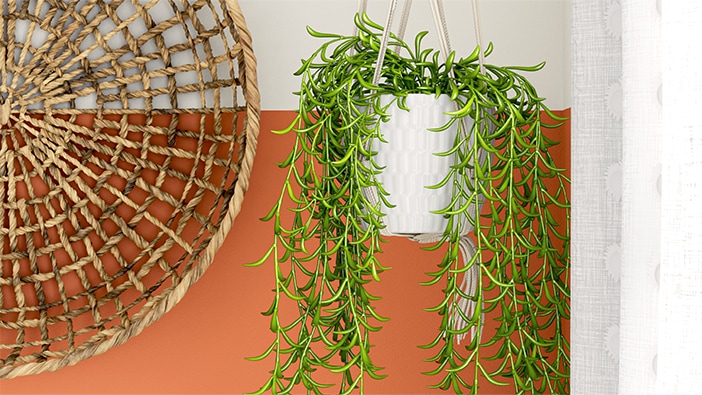
Hanging plants can serve as a focal point in a room and add to the overall look and feel of the space. The benefit of hanging artificial plants, rather than living plants, from the ceiling is that you don’t have to climb a ladder to water them. You can use artificial plants to decorate at any height, adding dimension and interest to your space.