
Backyard Canopies: The Basics

Before jumping into your build, take a minute to plan out the details that will make your canopy both functional and stylish. The right material, color and canopy type makes a big difference in how your setup holds up and how good it looks in your outdoor space.
Think about how you’ll use your canopy. Is it for weekend lounging, outdoor dining or hosting friends? Knowing this upfront helps you choose the right size, style and features from the start.
Quick tips to get started:
- Measure your space so your canopy fits comfortably without crowding your yard or patio.
- Choose colors that complement your outdoor furniture or home exterior.
- Consider sun exposure and weather in your area when selecting materials.
Canopy Materials

A canopy’s durability starts with its frame. Most frames are made from aluminum or steel, both designed to handle outdoor conditions. Aluminum is lightweight and rust-resistant, making it easy to move and maintain. Steel is heavier and sturdier, which is better for windy areas.
The canopy top is typically made from durable fabric like polyester, often treated to resist water and UV rays. If you’re planning to use your canopy regularly, look for fade-resistant and weather-resistant fabrics to help it last longer.
To keep your canopy secure, many setups include weight plates or anchor systems at the base. These help prevent shifting or tipping, especially on windy days. For extra stability, you can also use ground stakes if placing your canopy on grass.
Over time, the fabric top may show signs of wear from sun and weather exposure. The good news? You don’t have to replace the entire structure. A replacement canopy top is an easy way to refresh the look and extend the life of your setup.
What to look for when choosing materials:
- Rust-resistant frames for long-term durability
- UV- and water-resistant fabric for better protection
- Easy-to-replace canopy tops for simple maintenance
- Anchoring options for added safety and stability
Canopy Frames

The frame helps determine how stable and long-lasting your canopy will be, so it’s worth choosing the right material for your space and climate. Popular options include aluminum, steel and cedar wood, each have their own benefits.
Aluminum frames are lightweight, rust-resistant and easy to move, making them a great choice for temporary setups or smaller patios. Steel frames are heavier and more durable, offering added stability in windy conditions, but they may require a powder-coated or galvanized finish to help prevent rust over time. For a more natural look, cedar wood frames bring warmth and style while naturally resisting rot and insects, though they may need periodic sealing or staining to maintain their appearance.
When comparing frame options, also pay attention to construction details like joint connections, leg thickness and cross supports. Reinforced corners and wider legs can improve stability, especially for larger canopies.
Pro tips for choosing a frame:
- Look for powder-coated or galvanized finishes to resist rust and corrosion
- Choose heavier frames for windy or exposed areas
- Consider portability if you plan to move or store your canopy
- Check weight capacity and anchoring compatibility for added safety
Additional Canopy Features to Consider

To help your DIY backyard canopy hold up over time while still looking good, focus on features that improve durability, weather resistance and overall performance. A few smart upgrades upfront can save you time and maintenance down the line.
Mold- and Mildew-Resistant Canopy Materials
Outdoor accessories are constantly exposed to moisture, whether it’s from rain, humidity or morning dew. Without the right protection, mold and mildew can develop on wood, fabric and even metal surfaces, leading to staining, odors and long-term damage.
If you’re building a wood frame or incorporating wood elements, choose naturally resistant options like cedar or apply a mold- and mildew-resistant sealant or exterior paint. For fabric canopies, look for materials labeled as mildew-resistant or treated for outdoor use.
Regular maintenance also makes a difference. Letting your canopy fully dry before storage and occasionally cleaning the fabric can help prevent buildup.
Water Resistance and Protection
Rain is inevitable, so choosing the right level of water protection can help extend the life of your canopy. Not all materials perform the same. Some are water-resistant (able to handle light rain), while others are fully waterproof for heavier exposure.
Metal frames, especially steel, can be prone to rust if not properly treated. Look for powder-coated or galvanized finishes to help protect against corrosion. For canopy tops, materials like PVC-coated polyester offer stronger water resistance and durability in wet conditions.
If your canopy isn’t already waterproof, you can improve its performance with a waterproofing spray designed for outdoor fabrics. This is a quick way to add an extra layer of protection and refresh older canopy tops.
Preassembled Backyard Canopy Ideas
Pop-Up Canopies

Protection from the elements and easy transport make a pop-up canopy a smart option for a family's backyard. Available in a variety of sizes from the classic ten-foot to a more spacious 12-foot version, they’re portable enough to take down during a storm or keep in the car and are easy to set up. Some versions can be assembled in minutes, with no tools. Another consideration when choosing a pop-up canopy is whether it offers UV protection because not all fabrics block the sun. If that’s a priority, check that the canopy you buy is made of UV-blocking material.
Standard Canopies

Standard canopies are a versatile solution for creating shade and coverage in your backyard. If you’re hosting a gathering or just want to make your outdoor space more comfortable, these canopies are designed for quick setup and reliable protection.
Most standard canopies feature durable steel or aluminum frames with powder-coated finishes to help resist rust, corrosion and everyday wear. Paired with weather-resistant fabric or polyethylene tops, many options offer protection from sun and light to moderate rain, with some designs providing UV-treated materials and waterproof coverage for added durability. For added comfort and performance, some styles include ventilated tops for airflow, sidewalls or mesh panels for extra coverage and anchor points or stake kits for improved stability.
Available in a range of sizes, from compact 10-ft x 10-ft options to larger formats for entertaining, standard canopies make it easy to create a flexible outdoor setup that works for everything from casual weekend hangs to bigger events.
Party Canopies

Party canopies are designed to give you the coverage and flexibility you need for gatherings of all sizes. Use them for a backyard celebration or setting up for an event, these canopies help define the space while keeping guests comfortable.
Most party canopies feature spacious footprints and higher peak designs to accommodate groups, along with durable powder-coated steel frames for added stability. Many styles include removable sidewalls, zippered entrances or window panels, so you can adjust airflow, privacy and protection depending on the weather or occasion.
You’ll also find options with water-resistant or waterproof tops and UV-treated materials, helping block sun and light rain while maintaining a comfortable environment underneath. With quick-setup designs and versatile configurations, party canopies make it easy to create an inviting space for planning an event on a budget.
Water-Resistant Canopies

Stay dry while still enjoying the great outdoors in a water-resistant canopy tent. It’s a smart place to take shelter during a drizzly kid’s sporting event or to have on hand for an impromptu picnic. Choose from options with ample square footage that can cover a crowd if needed. Don’t forget the difference between waterproof and water-resistant. This type of canopy works well for light drizzle but not for severe weather spanning long periods of time. That said, it's an ideal item to have with you in case you need it while you’re out and about.
Canopy, Pergola or Gazebo?
Choosing between a canopy, pergola or gazebo comes down to how you plan to use your outdoor spaceand how permanent you want your setup to be. Each option offers a different balance of coverage, durability and flexibility.
Canopies are lightweight, portable structures designed for quick shade when and where you need it. They’re ideal for temporary setups like backyard gatherings, tailgating or seasonal use. Most are easy to assemble, move and store, but they’re not built for long-term exposure to harsh weather.
Pergolas are semi-permanent structures that create a defined outdoor living space. With an open or slatted roof supported by posts, they provide partial shade while still allowing airflow. Pergolas can be freestanding or attached to your home and are often used to anchor patios, outdoor dining areas or lounge spaces. You can also customize them with canopy covers, shade cloths or climbing plants for added coverage.
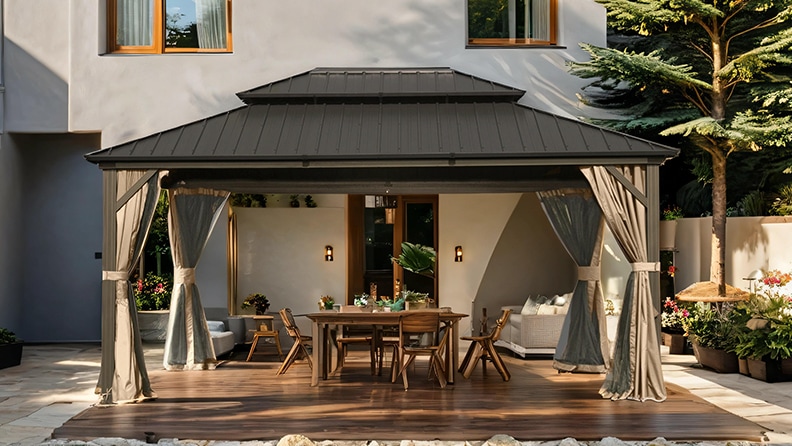
Gazebos are more permanent structures designed for full coverage and a more finished look. They typically feature a solid roof and optional walls or screens, offering better protection from sun, rain and insects. Gazebos work well as a dedicated outdoor room and are a good fit if you want long-term comfort and privacy without frequent setup or takedown.
If you're having trouble deciding, check out our helpful guide comparing gazebos and pergolas.
Shop Lowes.com for a Backyard Canopy

A little shade goes a long way. One minute it’s a quiet spot for your morning coffee, the next it’s where everyone gathers for food, drinks and good conversation. With the right canopy, your backyard becomes a space that works for whatever the day brings.
Ready to build your setup? Shop Lowes.com for canopies, accessories and all the materials you need to bring your outdoor space together.