
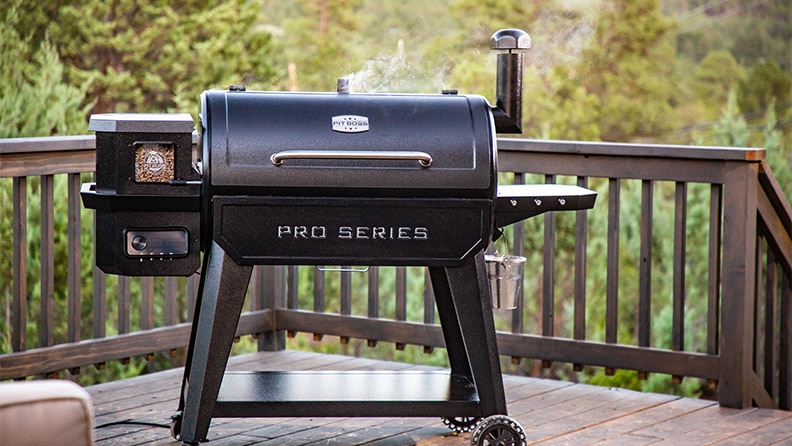
What Are Pellet Grills?

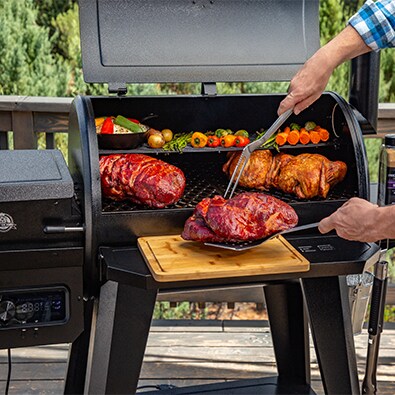
Pellet grills offer the capabilities of both a grill and a smoker. They’re fueled with wood pellets made of compressed hardwood sawdust, which allows them to heat quickly, burn hot and create clean smoke. Pellet grills are very user-friendly and provide consistent, even cooking for a variety of your favorite dishes.
How Does a Wood Pellet Grill Work?

To use a pellet grill or pellet smoker grill, start by pouring the cooking pellets into the storage container, known as a hopper, mounted on the grill. An electric motor powers an auger that moves the pellets from the hopper to the firebox. An ignition device lights the pellets, creating the combustion that cooks the food in the cook chamber. Intake fans bring in air to further feed the fire. The fans also circulate heat and smoke inside the cooking area, creating a convection cooking environment.
A digital controller regulates continued delivery of the pellets to the firebox to keep the grill at the designated temperature, usually between 180 and 500 degrees Fahrenheit. This controller gives you precise control of the cooking environment (similar to that of an oven), whether you want to cook slowly at a low temperature or more quickly with high heat. Most pellet grills include a meat probe that monitors the temperature of the meat you’re cooking and connects to the temperature control system.
The wood pellets provide the fuel for cooking, but the grill requires electricity to power the auger, controller and fan.
Do Pellet Grills Cook the Same as Other Grills?

Pellet grills cook with indirect heat, which doesn’t give you the heavy grill marks you get with a gas or charcoal grill.
However, some models can also cook with direct heat for grilling and searing, like a standard grill does.
Pellet grilling and smoking aren’t the only options. These grills provide even cooking with more precise and consistent temperature control than other grill types, and they also let you barbecue, roast and bake. Cook pork shoulders, ribs, briskets and other large cuts of meat in addition to burgers, sausages, hot dogs and whole chickens.
Pellet grills give you the option of cooking foods lower and slower than you could with a gas or charcoal grill, giving you more culinary options.
In addition, pellet grills:
- Have push-button starters and produce heat within an average of 10 to 15 minutes
- Give food a subtle, smoky flavor
- Let you enhance food flavors with different wood pellet types, including hickory, mesquite, apple, cherry and whiskey barrel
When grilling with direct heat, it’s important to monitor the grill and food during cooking. Don’t leave the grill unattended when using this option.
Pellet Grill Advantages and Disadvantages
Here are few points to think about when considering a pellet grill versus a gas or charcoal grill:
- Pellet grills often don’t heat up as quickly as gas grills, but they maintain a more even temperature once they’re hot.
- Pellet grills cook with indirect heat that is circulated using a fan for a more consistent smoke flavor, but they don’t char food quite like a gas grill. However, you can use a preheated cast-iron pan to help with searing. Some of the best pellet grills even include a flame broiler feature for finishing meats at high temperatures.
- These grills use electricity, so they’re not as portable as gas grills and are best for home cooking, rather than tailgating and camping.
- Pay attention to power cord length because it will affect where you can place the grill. You can use an extension cord with some grills, but follow the manufacturer’s specifications for type, length and gauge, and see Power Cord Safety Tips.
Smart Pellet Grills

Some of the latest-model pellet grills include convenient smart grilling technology that makes using them even easier and more worry-free. Using Bluetooth or Wi-Fi, you can pair these pellet grills with a smart device and use a special app to keep up with when your grill is preheated to the correct cooking temperature, when your food is done, when to flip your food and many other helpful features.
Pellet Smokers

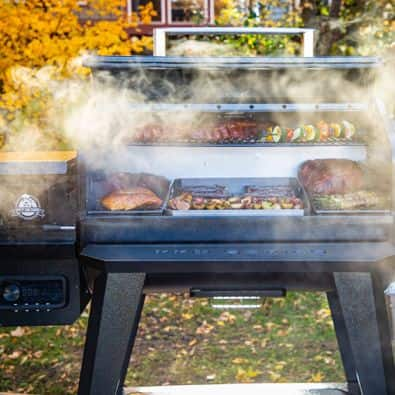
Wood pellet smokers perform the same function as traditional stand-alone smokers but require less monitoring. They are heated with wood pellets fed from a hopper, just like pellet grills, and have a temperature control for long, slow smoking. The best pellet smokers for entertaining have multiple racks with lots of surface area for accommodating large racks of ribs, chickens and turkeys, and side dishes.
Using Wood Pellets

How long do the cooking pellets last when you’re using a pellet grill? Specific times vary, depending on how you’re using the grill and the type of pellets you’re using, but below are general guidelines:
- For slow, low-temperature smoking on a pellet grill, plan on using about 2 pounds of pellets per hour of cooking.
- For faster, high-temperature grilling, have about 4 pounds of pellets on hand for each hour you’ll be cooking.
While you can use these tips as a guide, it’s always a good idea to have plenty of pellets on hand so you don’t risk running out while you’re cooking.
Pellets for pellet grills and smokers come in a variety of wood types — including blends of different woods — adding unique flavors to food. Pellets enhance the flavors of a variety of foods, from fall-off-the-bone ribs to sweet and crunchy corn on the cob.
Below are a few popular wood pellets and their flavor profiles:
- Competition blend includes maple, hickory and cherry woods that craft a sweet and smoky wood-fired flavor.
- Apple pellets have a light, sweet, fruity smoke flavor that pairs especially well with pork and chicken.
- Cherry has a mild flavor that gives food a subtle sweet and fruity flavor. It mixes well with other woods, like oak, pecan or hickory, to bring complexity to the flavor while maintaining the mild, fruity flavor.
- Hickory provides a full-bodied smoky flavor, but it can make food taste bitter if oversmoked.
- Maple adds a rich, maple smokiness layered with a hint of sweetness.
- Mesquite gives a bold, almost spicy, smoky flavor to foods, and it can easily overpower food.
- Oak adds a medium smoky flavor that pairs well with other woods.
- Pecan imparts a nutty, spicy flavor.
Follow the manufacturer’s safety regulations for whichever pellets you choose.
For more tips on outdoor cooking safety, see our grill and smoker guide.
Pellet type can be a factor in how long pellets last during cooking. For example, pellets made from fruitwood will typically burn more quickly than pellets made from hardwood.
Wood-Grilling Pellet Flavor Guide

Tastes vary. This chart is only a suggestion. Select the pellets that you believe would best complement the foods that you grill or smoke.
How Much Do Pellet Grills Cost?
The price of a pellet grill can vary greatly depending on the size and type of grill, as well as the included features. Also, freestanding grills are often less expensive than built-in grills. Entry-level grills may start at a few hundred dollars, while high-end models can cost over $1,000.
Frequently Asked Questions
Here are some common questions customers have about Lowe’s pellet smokers and pellet grills.
Do Pellet Grills Need Electricity?
Pellet grills use electricity to drive an auger to push the wood pellets into the grill firebox for temperature control.
How Long Can I Cook With a 20-lb Bag of Pellets?
The length of time a 20-lb bag of pellets lasts depends on your cooking temperature. On average, a 20-lb bag of pellets should last for six hours of high-temperature smoking or around 10-12 hours if you’re smoking at a low temperature.
Do Pellet Smokers Work in Cold Weather?
Yes, pellet smokers do work in cold weather. However, food may take longer to cook in extremely cold temperatures, so you’ll need to plan accordingly.
Should I Get a Pellet Grill or Pellet Smoker?
Pellet smokers are intended solely for slow smoking foods, so you won’t be able grill foods in a pellet smoker. Pellet grills work just like gas grills, but they can also impart a smoky flavor from the wood pellets. When considering a smoker vs. a pellet grill, think about what types of foods you most want to make for you and your guests.
What Should I Look for in a Pellet Grill?
You’ll want to consider the size of the grill, the cooking temperature range it offers and any additional features that are important to you — such as a built-in thermometer — when shopping for a pellet grill.
Is There a Difference Between Grilling Pellets and Smoking Pellets?
Yes, there is a difference between grilling and smoking pellets. Check the manufacturer’s indications on any fuel you’re purchasing to make sure it’s compatible with your grill or smoker.
Is It Worth Buying a Pellet Grill?
Pellet grills are often more expensive than gas or charcoal grills. If you only grill once or twice a year, it may be hard to justify the added expense. If you cook out regularly, a pellet grill is probably a wise investment.