Prices, Promotions, styles, and availability may vary. Our local stores do not honor online pricing. Prices and availability of products and services are subject to change without notice. Errors will be corrected where discovered, and Lowe's reserves the right to revoke any stated offer and to correct any errors, inaccuracies or omissions including after an order has been submitted.
Electrical Wire & Cable

Shop by Gauge

14-Gauge Wire
Medium-thick wire commonly used in residential lamps, receptacles and light-duty cords

12-Gauge Wire
Medium-thick wire used for household circuits, such as outlets and kitchen appliances

10-Gauge Wire
Thick wire used for powering heavy-duty appliances, like water heaters and air conditioners

8-Gauge Wire
Heavy-duty wire often powering large appliances, like electric ranges, dryers or subpanels

6-Gauge Wire
Thick, high-capacity wire used for large appliances, subpanels or electric vehicle chargers

4-Gauge Wire
Heavy-duty conductor used for high-current applications, like large subpanels or high-power vehicle chargers

Reference Guides





Convenient Shopping Every Day


All Electrical Wire & Cable
- Armored Cable
- Cable & Wire Holders
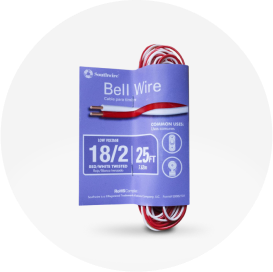
- Doorbell Wire
- Dual Armored Cable
- Electrical Whips & Whip Kits
- Ground Wire
- Lamp Cords
- Landscape Lighting Cables & Connectors
- Network & Data Cables
- Non-Metallic Wire
- Power Cord
- Primary Wire
- Security Cables
- Service Entrance Cables
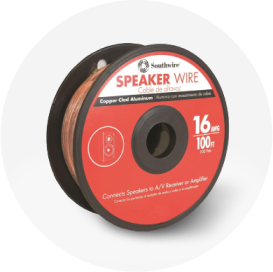
- Speaker Wire
- Specialty Wire & Cables
- Sprinkler Wire
- Submersible Pump Cables
- TFFN & THHN Wire
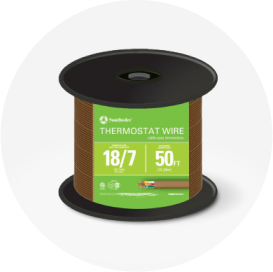
- Thermostat Wire
- UF Wire
- XHHW Wire
Related Products


Electrical Wiring for Every Application
Electrical wiring and electrical connectors are essential elements in residential and commercial buildings. In fact, the average home has about two miles of cable running through it. There are a variety of cables and connectors that offer different uses, from doorbell wiring and thermostat wiring to ROMEX Wire, ethernet cord wires, weatherproof wiring connectors and more. Below we’ll provide some helpful information to make it easier to identify the many types of wiring available.
How to Identify Wiring and Cables
On wiring jackets, you’ll see a letter code, which indicates attributes of the wire, including material, gauge and voltage rating. The National Electrical Code (NEC) has a letter system that makes it easy to quickly identify a wire’s capabilities. Some common codes include THHN, XHHW and THW. THHN is the most commonly used wire in conduit and cable trays for services in commercial or industrial applications. Below are some common letters and attributes seen regularly in residential wiring:
- T: thermoplastic insulation
- H: heat resistance
- HH: high heat resistance
- W: suitable for wet conditions
- N: nylon coating resistant to oil or gas damage
- X: synthetic polymer and flame-resistant
Most residential wire is labeled “CU” for copper, the standard conductor for home electricity. Copper wires are insulated to prevent fire and shock since current flows along their surface.
Aluminum wire, while more conductive, deteriorates faster and is rarely used in modern homes. Older wiring may be aluminum or copper-clad aluminum. Per NEC guidelines, only a licensed electrician should install aluminum wiring.
Color-Coded Jackets for NM-B
Color-coded jackets are used on non-metallic (NM-B) wiring as a simple way to identify the gauge of the wires inside. The colors include:
- White: 14-gauge wire, used for lighting circuits
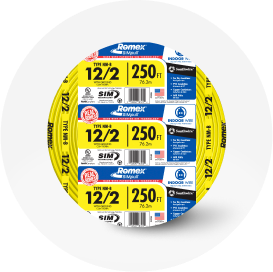
- Yellow: 12-gauge wire, used regularly in households for general power to outlets and appliances
- Orange: 10-gauge wire, commonly used for air conditioning (A/C) units and water heaters
- Black: 8- and lower-gauge wire, used for feeding subpanels, electric ranges, ovens and more
Popular Cable Types
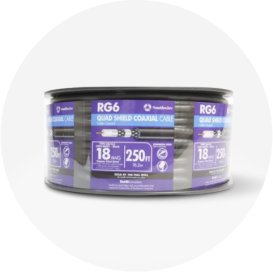
- Coaxial Cable: This is a metallic cable that carries television and video signals and connects to video equipment. It features a central conductor with a dielectric insulator, metallic shield and plastic jacket.
- ROMEX Wire: ROMEX is a trade name for electrical conductor wiring that’s commonly used as residential branch wiring. It’s often used for lighting and outlet circuits.
- MC Cable: Metal clad cable is heavily used in commercial work, for running through concrete or other commercial environments.
- Thermostat Wire: This is used in heating and A/C systems and is available in 20 or 18 gauge with up to 10 conductors.
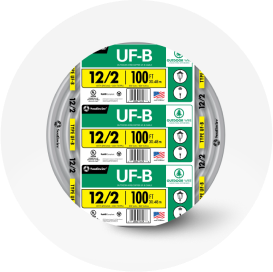
- Underground Feed (UF) Wiring: This is good for underground wiring needs and powering electrical installations like irrigation systems, landscaping lighting and more.
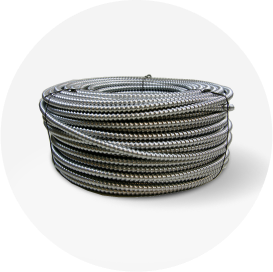
- Armored Cables, Like BX Cable: This collection of insulated plastic-coated wires is protected by a metal sheathing that’s stronger than most.
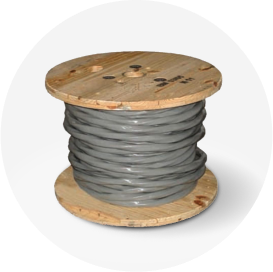
- Service Entrance Cable: This type of cable may not be the first one we think of, but its importance can’t be overlooked. The service entrance cable is the conduit that brings power from an electric company to a residence or other building. Without it, we wouldn’t have power.
These are just a few of the many wiring types that we carry. For a more in-depth look, check out our Electrical Wire and Cable Buying Guide. Whether you just need to pick up a coaxial cable or butt connector or need to learn how to run electrical wiring in a new home or addition, we’ve got all of the supplies from trusted brands like Southwire, tools and knowledge you need to safely do the job.