

Start With How You Use Your Garage
It’s easy to start shopping for a workbench by width, number of drawers or appearance. A better first question is: What happens in your garage on an average weekend?
A homeowner repairing bicycles has different needs from someone building furniture. You may need a permanent workshop or simply a sturdy surface that appears when it’s time to tackle a project and disappears when your car comes back inside.
Before choosing a workbench, take inventory of three things: the projects you do most, the tools you use for them and the amount of floor space the garage can realistically devote to work. If the garage serves several purposes, mobility and compact storage may matter more than maximum bench size. Also think about:
- How doors open, where vehicles park and if there’s room for long materials
- Where sawdust, hardware and tools will go during a project
- Good lighting
- Keeping the workbench and surrounding area flexible as your tools and projects change
Mark the proposed workbench footprint on the garage floor with painter’s tape. Open car doors, carry a long board through the space and pull frequently used equipment out of storage. A bench that fits on paper may still interrupt the way you move through the garage.


Garage Workbench Ideas
To get you started, here are eight workbench ideas to help you easily visualize how a workbench may be able to work in your space.
1. Keep It Simple With a Basic Workbench
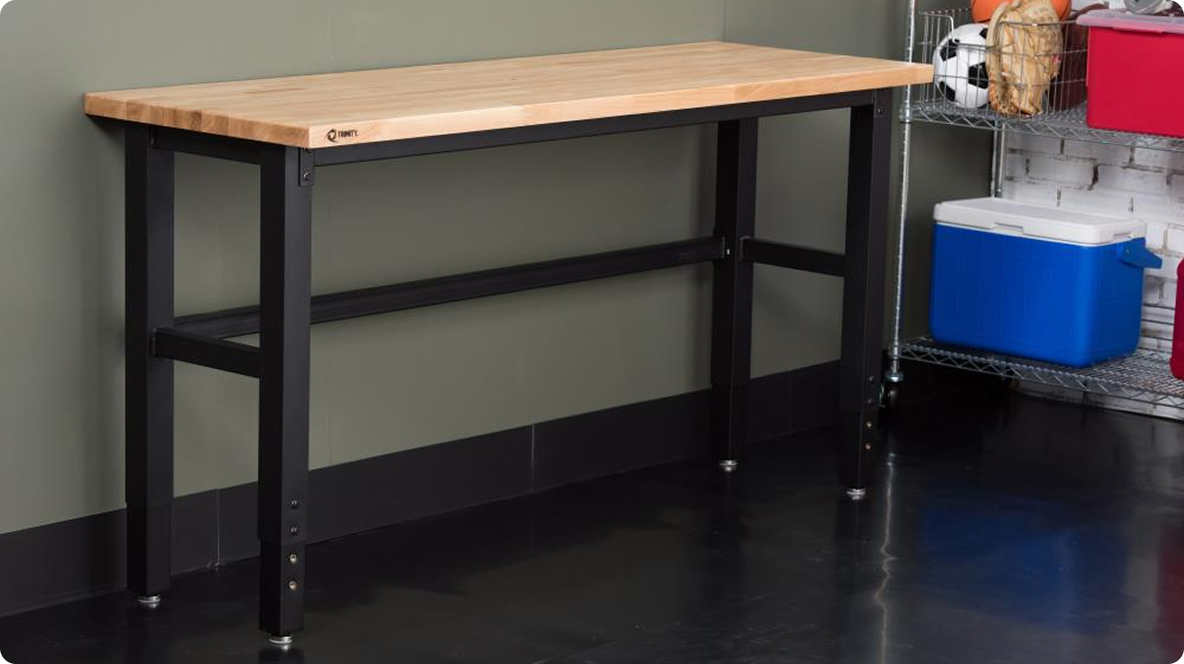
For occasional repairs and weekend projects, a straightforward bench may be all you need. A basic garage workbench typically combines an open frame with a flat work surface and sometimes a lower shelf. The uncluttered design leaves room for bulky tools underneath and makes it easy to customize the area later. This setup makes sense if you already own separate tool storage or don’t need permanent drawers for every hand tool.
The tradeoff is organization. Without built-in storage, tools can quickly migrate onto the work surface. Add wall hooks, a tool chest or shelving nearby so the bench remains useful as a work area instead of becoming another garage shelf.
2. Choose a Workbench With Drawers for Everyday DIY Projects

If you regularly reach for wrenches, drivers, measuring tools and hardware, consider a workbench with storage. Drawers let you keep smaller items close without covering the work surface. Deeper cabinets can accommodate larger power tools while shelves work well for supplies you want to see at a glance.
Lockable storage is worth considering if children have access to the garage or you store tools and materials that should be secured.
3. Use a Rolling Workbench When Your Projects Move

Sometimes the most useful workbench isn't attached to anything. A rolling workbench can move next to a vehicle for repairs, toward the garage door when cutting materials or into the center of the garage when you need access from several sides.
Mobility can also make a crowded garage easier to reconfigure. When the project is finished, roll the bench back against the wall. Choose a workbench with casters or purchase casters designed for the unit and make sure they lock securely, and keep load capacity in mind so it can support the weight of the tools and materials you expect it to hold.
Consider the floor before buying a rolling bench. Large thresholds, cracks and uneven concrete can make a heavily loaded workstation harder to maneuver.
4. Save Floor Space With a Folding Workbench

A folding or wall-mounted bench can turn a narrow section of wall into temporary project space. This is one of the most practical small garage workbench ideas, especially in a one-car garage. When open, it provides a surface for light repairs, assembly or hobby work. When the project is finished, the top folds away so the garage can return to parking or storage duty.
Before installation, confirm that the wall and mounting hardware can support the bench according to the manufacturer’s instructions. Also consider what happens to items stored above and below the work surface when it folds. For homeowners who rent or don’t want to install a permanent wall-mounted bench, a portable folding workbench offers similar flexibility.
5. Add Pegboard for Tools You Reach for Constantly

Good garage storage isn't about putting everything out of sight. It's about making the right things easy to reach. A pegboard workbench works especially well for frequently used hand tools such as pliers, measuring tools and small clamps. Hooks, baskets and small shelves can be rearranged as your tool collection changes. Keep the most-used items within comfortable reach and move specialty tools higher or farther to the sides. The result should feel more like a working station than a wall display.
Pegboard systems have specific installation and weight requirements, so follow the manufacturer's mounting instructions and avoid overloading hooks or panels.
Leave some empty pegboard space when you first organize it. Tool collections tend to grow and a completely filled wall gives you nowhere to put the next frequently used tool.
6. Build a DIY Workbench Around Your Projects

A DIY workbench lets you customize the width, height, work surface and storage around a specific hobby or tool collection. You can also design around obstacles such as windows, steps or existing garage cabinets.
We recommend roughly 32 to 36 inches as a common standing workbench-height range, but comfort depends on your height and the kind of work you do. Fine assembly or detail work may feel comfortable at a different height than tasks that require downward force. If you’re building the bench yourself, test the proposed height before cutting the legs. A DIY bench can also make future upgrades easier. Leave room to add a vise, storage, power-tool station or replaceable work surface later.
If you plan to mount a bench vise or stationary tool, design for those concentrated loads from the beginning rather than adding them after the bench is built.
7. Turn the Bench Into a Complete Workstation

The best garage workbench ideas extend beyond the benchtop, and in this case, think vertically. Shelves above the bench can hold frequently used supplies while wall storage keeps tools visible. Cabinets below can contain bulky equipment.
Then consider the parts of the workspace that are easy to overlook: lighting and power. Good lighting improves visibility when measuring, fastening or inspecting a project. Add overhead strip lighting or LED lamps when a garage or workshop is dim. Some ready-made workbenches also offer integrated lighting, outlets or USB connections.
Plan access to electrical power before positioning stationary tools. Avoid creating a layout that depends on cords running through walking paths.
Electrical changes should comply with applicable codes. Hire a qualified electrician when you need new circuits, receptacles or other electrical work beyond your experience.
8. Create Zones Around the Workbench

A workbench works better when the rest of the garage supports it. Try dividing the area into simple zones based on how you complete a project. Store frequently used tools near the bench. Keep longer materials where they can be carried to the work area without weaving between vehicles. Put cleanup equipment such as a shop vacuum somewhere easy to reach. If you use larger stationary tools, think about the path material travels through the tool. A table saw or miter saw needs clear space beyond the machine, not just enough room for the tool itself.
Create a Garage Workspace You'll Actually Use
A useful garage workbench doesn’t have to be the largest or most elaborate option. It needs to fit the garage, support the projects you enjoy and leave enough room for everything else the space has to do.
That’s especially important in a small garage. Use wall storage before giving up more floor space and consider flexible solutions such as a fold-down surface, rolling workstation or compact bench paired with portable supports. If the garage still needs to hold a car, plan the workspace with the vehicle parked inside and account for doors, mirrors and walking space. The goal is to create a setup that works when you need it and stays out of the way when you don’t.