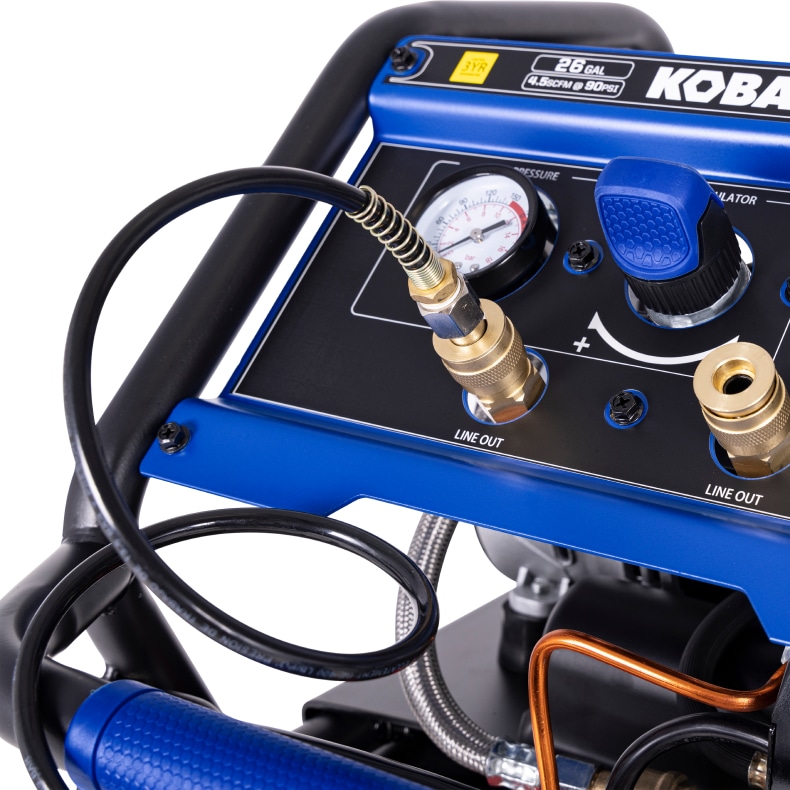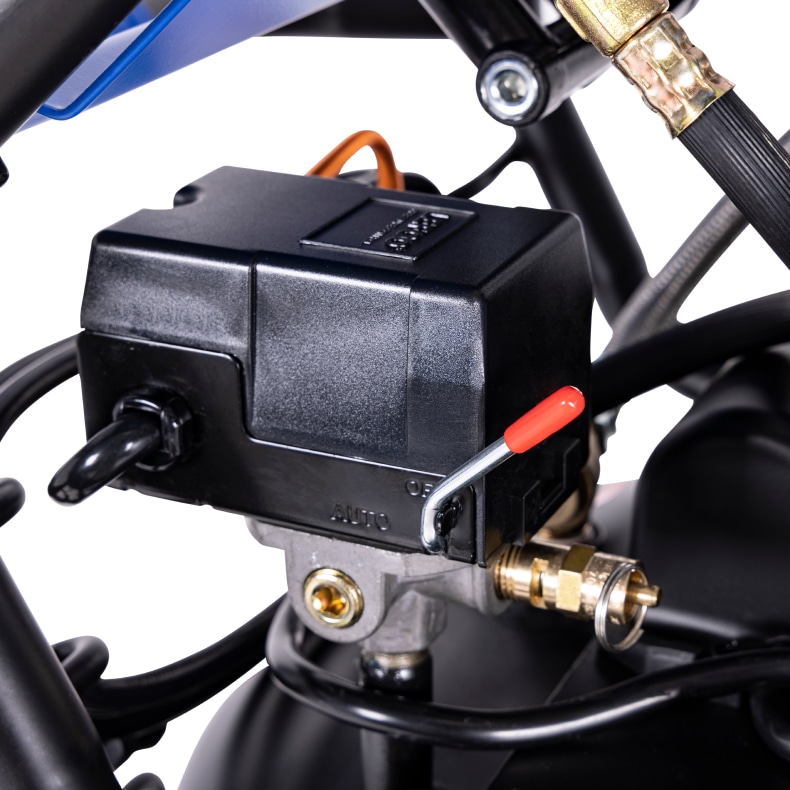

Air Compressor Safety Basics
There are many types and models of air compressors. Before using one, read the manufacturer’s instructions that came with the appliance. Below are some general safety tips for using any air compressor:
- Always wear ear and eye protection while operating an air compressor. Additionally, wear a respirator mask to avoid breathing in compressed air or sprayed paint.
- Ensure you’re working in a well-ventilated space as air compressors can emit hazardous fumes.
- Never point an air compressor hose at yourself or anyone else. High-pressure air can cause bodily harm including ruptured ear drums.
- Make sure to plug your air compressor into a grounded electrical outlet.
- Let the air compressor cool down completely after usage before touching any parts or changing its oil.
How to Use an Air Compressor
Before using an air compressor, inspect the equipment for damaged hoses, loose fittings, or leaks, and make sure the pressure settings match the tool or task being performed. Always wear appropriate personal protective equipment, including safety glasses and hearing protection and keep hands, clothing and hair away from moving parts. Never point compressed air at yourself or others and disconnect the air supply before performing maintenance or changing attachments. Store the compressor in a clean, dry area and release excess pressure from the tank after use to help prevent accidents and equipment damage. For step-by-step instructions, keep reading.