

Tools and Materials
Product costs, availability and item numbers may vary online or by market.
Key Takeaways
- Preparation is everything. Properly prep the room by covering floors/furniture and tape edges to ensure clean lines.
- Use the right tools and paint. A quality roller, extension pole and ceiling-specific paint will help achieve smoother, more even coverage.
- Start with cutting in. Paint the edges of the ceiling first (where it meets the walls) before using a roller for the main surface.
- Work in sections for consistency. Divide the ceiling into manageable areas and maintain a wet edge to prevent streaks or lap marks.
- Use proper rolling technique. Apply paint in overlapping strokes (often a “W” or similar pattern) to distribute paint evenly.
- Avoid overloading or underloading the roller. Too much paint causes drips while too little leads to uneven coverage.
- Keep a steady pace. Working too slowly can cause visible lines. Consistent movement helps achieve a uniform finish.
- Apply multiple coats, if needed. One coat may not fully cover existing paint—allow drying time and apply a second coat for a professional result.
- Good lighting helps spot imperfections. Use proper lighting to catch missed spots or uneven areas while painting.
- Clean up carefully. Remove tape before paint fully dries and clean tools promptly to extend their lifespan.
Prepare to Paint

Painting a ceiling isn’t much different from painting a wall. Proper preparation ensures the best results. To repair existing damage and protect your furniture, floors, fixtures and trim, read how to Prep for Paint. Wear safety glasses, use cleaning gloves and position your drop cloths before painting.
The best way to paint a ceiling is to use ceiling paint and primer in one. It’s formulated to spatter less and has a flat finish to help hide imperfections. A gallon generally covers about 400 square feet. To calculate how much paint you’ll need, use our Paint Calculator.
As for color, white interior ceiling paint can brighten rooms without much natural light. On the other hand, a large room with high ceilings feels cozier if you paint the ceiling a darker color. Small rooms can feel more open if you minimize the contrast between the walls and ceiling.
It’s possible to paint over a popcorn ceiling covered with a wall and ceiling texture product. You’ll need to use a roller with a thicker knap (the fibers covering the roller) that’s made for textured surfaces. You’ll need more paint to get into the grooves of a textured ceiling, but be careful not to saturate the popcorn ceiling too much.
Painting a ceiling is a messy job. Put down plenty of drop cloths and wear a hat to avoid paint spatters in your hair. If you want to paint your walls while you're still set up, check out How to Paint a Wall, Trim and Ceilings.
Paint the Ceiling


Paint Vaulted and Tray Ceilings
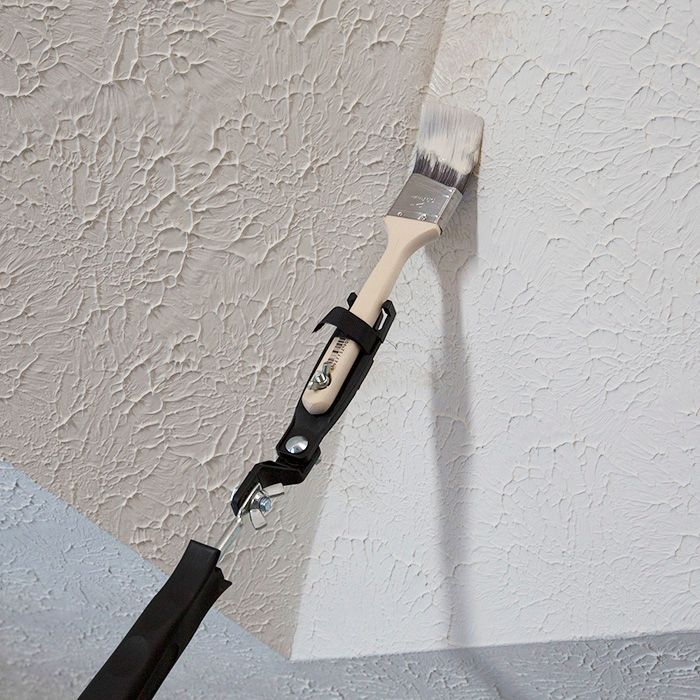
Vaulted and tray ceilings bring the drama with the additional height, but they can be more challenging to paint than a flat 8-foot-high ceiling. If you have really high ceilings, we recommend consulting with a professional.
Painting Tips
Watch our DIY Basics videos to learn more about painting preparation, painting and finishing: How Do I Load a Paint Roller? Do I Have Oil or Latex Paint? and How Do I Use Caulk?
Frequently Asked Questions About Painting a Ceiling
Wondering how to properly paint your ceiling? Below are answers to commonly asked questions about painting a ceiling.