

Key Takeaways
- A garden hoe lets you break up ground, get rid of weeds, blend amendments and more.
- A standard garden hoe, known as a draw hoe, is useful for most garden hoeing, but you can find some types suited for precision work and others that excel at weeding.
- Protect yourself with gloves, closed-toe footwear, a hat and sunscreen.
- Make shallow cuts for weeding and progressively dig deeper when breaking ground.
- Clean the blade after use and sharpen as necessary, pushing a flat mill file from back to front across the blade edge.
What Is a Garden Hoe Used For?

A garden hoe is a common hand tool for working the soil in a garden, featuring a long handle and, typically, a fixed blade set at an angle to the handle. With a garden hoe you can:
- Break up hard ground to create a new planting area
- Chop and dig out weeds or grass
- Loosen soil to make it easier for oxygen and water to reach plant roots
- Blend amendments into the soil
In addition to preparing soil for new plants, the relatively small blade on a hoe lets you work around existing plants.
How to Use a Garden Hoe
Follow these steps to cultivate and weed effectively.
Step 1: Choose the Right Blade Type

A traditional garden hoe with a rectangular blade, known as a draw hoe, is versatile enough for most common garden hoeing tasks, but some designs are suited for more specific work.
- Precision Work: Warren hoes have arrowhead blades that make them effective for weeding close to plants and for creating furrows.
- Weeding: Loop hoes, such as action hoes and scuffle hoes, have heads that are open loops or triangles, allowing easy-back-and-forth motion to chop weeds just below the soil.
- Cultivating and Loosening Soil: Two-prong hoes have a flat blade for moving soil and twin tines for aerating and cutting weeds.
Step 2: Get Ready to Work
Put on work gloves or garden gloves, as well as:
- Work boots or closed-toe shoes
- A hat or cap
- Sunscreen
Get rid of any rocks or other obstructions. If you have a sprinkler system irrigating the area, mark the locations of below- and above-ground supply lines, as well as the sprinkler heads or emitters. For best results, the soil should be moist but not muddy.
Step 3: Begin Work
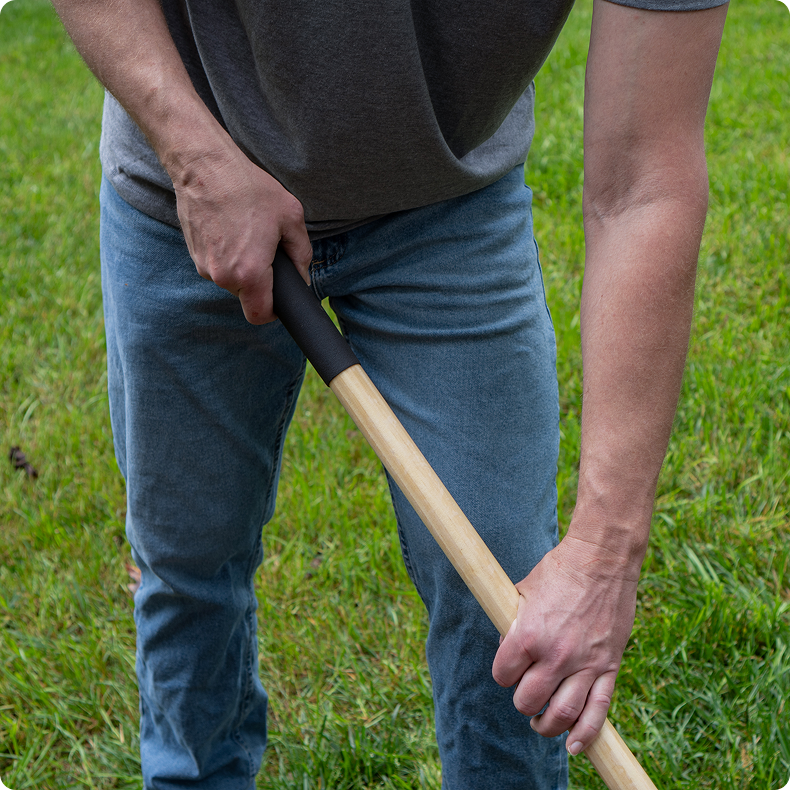
Hold onto the handle so you have a comfortable grip and can keep a stance with minimal bending. Place one hand lower on the handle to guide the work and create the chopping motion and the other hand higher to help balance the hoe and add leverage for pulling and pushing. Remember these tips:
- Keep your feet shoulder-width apart.
- Keep the head of the hoe at an angle to the ground, adjusting the angle for shallow or deeper cuts.
- Shallow cuts are best for weeding, while it’s best to break ground with multiple cuts of increasing depth.
- Keep the head close to the ground and bring it down smoothly with just enough force to do the work.
- Pay attention to your surroundings and keep your feet and legs clear of the blade.
- Take frequent breaks.
Step 4: Clean Up After Gardening
Like any tool, you need to maintain a garden hoe to keep it working effectively season after season:
- Clean away dirt and plant material after using the hoe.
- Dry the blade completely.
- Remove any rust with steel wool.
- If the blade is dull, secure the hoe in a vise and push a flat mill file back to front across the blade edge, maintaining the original angle.
- Apply a light coat of mineral oil to the blade to protect against rust.
- Lightly sand away any splinters on the handle.
Wear work gloves and safety glasses when filing the blade.
Weed and Cultivate With the Right Technique
A garden hoe is a simple tool but knowing how to use it helps you keep your garden weed-free and growing. Shop Lowes.com for a standard garden hoe that can handle most tasks or a specialized hoe for weeding and creating furrows. Stop by your local Lowe’s and try out different garden hoes to find one that lets you work comfortably and with a good grip. A Red Vest associate can help you find a garden hoe for your work, as well as the tools and supplies you need to maintain it.
Using a Garden Hoe FAQ
Use the answers to these common questions to help you find the best tools for your garden.
Can You Use a Garden Hoe to Remove Grass?
Yes, you can use a hoe to cut the grass roots below the soil and remove the grass and roots. While you can use a standard garden hoe to remove grass, a loop hoe or two-prong hoe makes removal easier. For larger areas of grass, a mattock or turf cutter is more effective.
What’s the Best Type of Garden Hoe for First-Time Gardeners?
If you want a single garden hoe that works for several tasks, such as cultivating the soil, working in amendments and chopping weeds, a standard garden hoe (known as a draw hoe) can be effective. If your main purpose is weeding, an action or scuffle hoe can make the work easier.
How Often Should You Hoe a Garden to Control Weeds?
Hoe your garden whenever you see several weeds sprouting. Getting rid of the weeds when they’re young is easier and more effective than waiting until they have a chance to establish deep or extensive root systems.