

Why You Need to Know How to Get Rid of Mosquitoes
The annoyance and discomfort mosquitoes create isn’t the only reason you need to know how to get rid of mosquitoes in your yard. They are a health concern due to diseases some mosquitoes transmit when they bite, including:
- Zika virus
- Malaria
- Dengue
- West Nile virus
Learning how to get rid of mosquitoes from your yard reduces the risk of exposure to these health issues. For more detailed information on mosquitoes and mosquito-borne illnesses, visit the Centers for Disease Control and Prevention mosquitoes website.


How to Get Rid of Mosquitoes in Your Yard
If mosquitoes are a problem in your yard, you can try mosquito yard treatments that drive them away or look for solutions that kill mosquitoes.
When using insect-control products, follow package directions regarding application, safety, storage and disposal. Don’t overapply. Use insect-control products carefully to reduce the risk of accidentally killing beneficial varieties, such as pollinators.
How to Repel Mosquitoes in a Yard

You can find sprays, foggers and hose-end mosquito yard treatments designed to repel mosquitoes. Depending on the product, repellents can be airborne or treat an entire lawn to create a repellent barrier. Some mosquito yard treatments also kill other insects as well.
Outdoor repellent candles and torches can help with mosquito control in small areas while adding ambiance to your outdoors. There are also tabletop devices that dispense repellents. Keep in mind that wind reduces the effectiveness of airborne mosquito-control products.
How to Get Rid of Mosquitoes in the Backyard Naturally

- Lavender
- Sage
- Marigolds
- Thyme
- Basil
- Rosemary
- Mint
- Garlic
Some plants that act as mosquito repellents are toxic to pets, including lavender, mint and garlic. Use caution if you have a pet and are considering adding one of these plants to your landscape. Talk to your veterinarian if you have questions about the suitability of specific plants.
One of the most effective ways to get rid of mosquitoes in your backyard naturally is to make your yard less attractive to mosquitoes, as we discuss in Mosquito Prevention, below.
Essential Oil Repellents
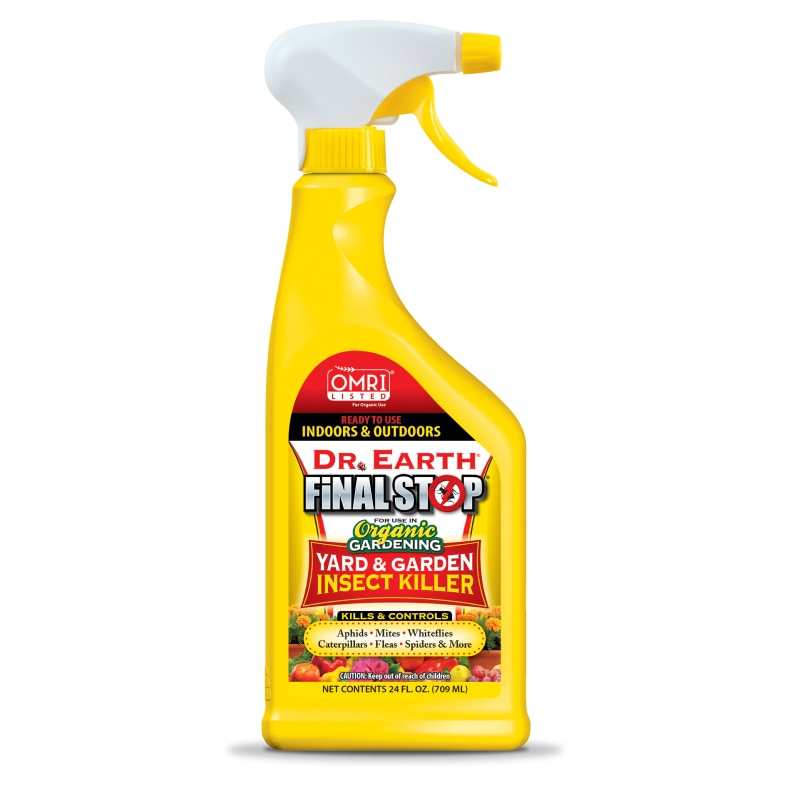
You can also look for active ingredients based on essential oils such as:
- Geraniol
- Cornmint oil
- Rosemary Oil
- Peppermint Oil
Outdoor insecticides are also available as spot treatments and as hose-end bottles for large areas such as lawns. Some are short-term solutions that provide immediate relief from mosquitoes, gnats, wasps and ants. They are great to use before cookouts and other outdoor activities. Other mosquito yard control solutions provide ongoing control of mosquitoes and insects that can damage your landscape.
How to Kill Mosquitoes

If repellents won’t solve your mosquito problem, you need to know what kills mosquitoes to reduce the aggravation and health risks of mosquitoes in your yard. Mosquito pesticide sprays and foggers are an effective means of killing mosquitoes in a yard. Look for active ingredients that contain synthetic pyrethroids such as:
- Zeta Cypermethrin
- Sumithrin (d-phenothrin)
- Tetramethrin
- Cypermethrin
Some indoor insecticide sprays and foggers kill mosquitoes in addition to other household insects. Like outdoor products, their effective time period varies.
Can I Do Mosquito Control Myself?
Lowe's has a variety of mosquito sprays and other products a homeowner can safely dispense when used as directed. Always follow the instructions included with the mosquito control product you purchase.
Personal Mosquito Repellents

Repellents designed to protect individuals can be particularly useful in outdoor areas that you can't treat, such as hiking trails or outdoor concert venues. Look for repellents that are also effective against gnats, ticks and other insects.
Some products are designed for direct application to exposed skin. DEET is a common active ingredient. The higher the percentage of DEET in the product, the longer it repels insects. Other repellents use natural plant oil extracts to provide protection. Wristbands treated with repellents are also available.
As with any insect repellent, follow the manufacture instructions for application and safety.
Wear loose-fitting, light-colored clothes when you go outside. Some mosquitoes can strike through tight clothing and some are attracted to darker colors. When practical, stay indoors during high mosquito activity periods — typically sunrise, sunset and early evening — or consider wearing long sleeves, long pants and socks.
Home Remedies for Mosquitoes
There are several home remedies for mosquitoes that might act as mosquito repellant treatments. These can reduce the nuisance of mosquitoes, but effectiveness varies and they are best suited for use where there is low risk of mosquito-borne illness. Several examples of home remedies for mosquitoes are below:
- Burning thyme leaves can repel mosquitoes from the immediate area.
- Peppermint oil in a 1:10 mixture with lotion can be effective.
- Cinnamon oil in a 1:10 lotion mix can repel mosquitoes.
- Lemon eucalyptus oil is an effective repellent in a 1:10 solution of lemon eucalyptus oil and witch hazel. You’ll also find lemon eucalyptus oil as an active ingredient in some commercial personal mosquito repellents.
- The Food and Drug Administration does not regulate essential oils from plants for safety or effectiveness.
- Essential oils may trigger allergic reactions in some people.
- Don’t apply an un-diluted essential oil directly to your skin.
- Don’t apply a repellent made with lemon eucalyptus oil to children 3 years old and younger.
- If you’re in an area where mosquito-borne illness is a concern, check with a medical professional for advice on whether a commercial chemical repellent, such as one containing DEET, is a better option for a mosquito repellant treatment than a home remedy for mosquitoes.
Mosquito Traps

Mosquito traps attract, capture and kill mosquitoes, and can be useful for reducing mosquito activity around patios, decks and yards. Repellents try to keep mosquitoes away from you, while traps attempt to reduce mosquito populations in the area.
Most mosquito traps mimic human cues like heat, scent and light. Depending on the model, they may use carbon dioxide (CO₂), heat, moisture, UV light or chemical attractants. Once mosquitoes approach, a fan may pull them into a collection chamber, or they may become stuck to a glue board or other trapping surface. Some popular traps use a combination of attractants to draw insects away from people and toward the trap.
Mosquito traps can reduce the number of mosquitoes in a localized area, but results vary considerably based on the trap, mosquito species, yard conditions and placement. A trap usually isn't a complete mosquito-control solution by itself.
The strongest approach is generally to combine trapping with eliminating standing water, keeping gutters clear, changing water in birdbaths and other containers regularly, and using an EPA-registered mosquito repellent when needed.
Placement matters, too. A mosquito trap generally shouldn't be placed right beside the seating area you're trying to protect—you don't want to draw mosquitoes toward people. Depending on the manufacturer's directions, it's often better positioned away from gathering areas and closer to shady, humid areas where mosquitoes tend to rest.
Mosquito Prevention
In addition to using repellents and insecticides, reduce your exposure to mosquitoes by making your landscape less desirable to them. Mosquitoes need water to breed, so getting rid of standing water around your home can decrease the number of mosquitoes that hatch in the area.
- Fill in low areas in your yard where water collects. See — How to Solve Yard Drainage Problems — if you need to improve the drainage of your lawn.
- Keep gutters and downspouts clear and well maintained so they drain correctly. Read — How to Clean and Repair Gutters — for instructions.
- Check and empty water from toys, watering cans, planters, plant saucers, swimming pool covers or anything that can collect water.
- Change the water in birdbaths at least once a week.
If you need to maintain areas of standing water — such as an ornamental pond — consider adding anti-larval tablets or mosquito dunks containing Bacillus thuringiensis. This bacterium kills mosquito larvae but is safe for birds and other animals.
Keep porch and window screens in good repair to help prevent mosquitoes from getting into your home.