
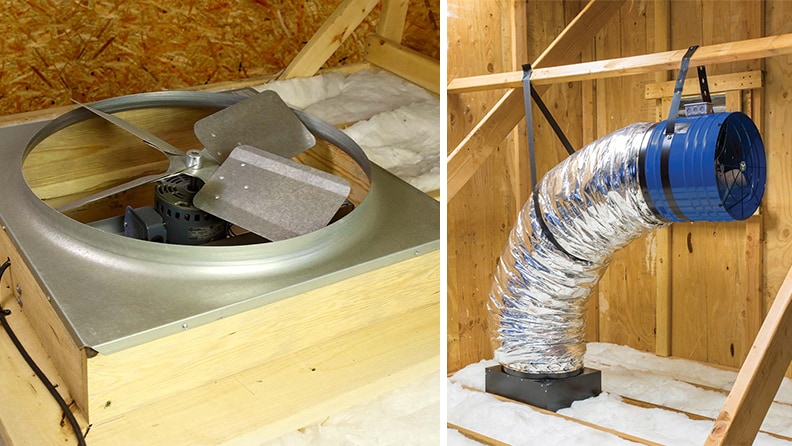
Whole House and Attic Fans: Key Takeaways
- Whole-house fans and attic fans are different products designed for different purposes.
- Whole-house fans cool the entire home by pulling in fresh air through open windows and exhausting hot air into the attic and out through roof vents.
- Whole-house fans are best operated in the evening and early morning, not during the heat of the day.
- Attic fans cool only the attic and are typically used during hot daytime hours.
- Properly used attic fans can keep attic temperatures within 5–10°F of the outdoor temperature.
- Attic fans can help reduce second-floor heat and may lower energy bills.
- In winter, attic fans can help reduce moisture buildup and prevent condensation or mold.
- Whole-house fans are generally more efficient for cooling living spaces, while attic fans are usually less expensive to install.
- Some homes may benefit from having both systems, depending on structure and climate.
- An HVAC professional can help determine the best ventilation solution for your home.
Fan Terminology
The terms whole-house fan (sometimes abbreviated house fan) and attic fan are often confused and used interchangeably. However, they’re, in fact, different products used for different purposes. In short, attic fans remove heat from your attic — as the name suggests — and are intended to run on hot days. Whole-house fans are designed to run overnight, exhausting hot air from your entire home while the sun isn’t baking your home’s exterior.
Types of Fans


Whole-house fans ventilate your home and your attic. These products are designed to run during the evening and early morning (the coolest parts of the day). The purpose of a whole-house fan is to rid your home of heat that builds up while the sun is out. Typically, a whole-house fan shouldn’t be run during the day because doing so would heat your home instead of cooling it. However, it can be run for brief periods of time in certain situations if you need a complete air exchange, for example, on an unusually warm winter day.
Attic fans are designed to only cool your attic rather than your entire home and are used in combination with roof vents. With proper use, attic fans can keep the temperature in your attic within 5-10 degrees Fahrenheit of the temperature outdoors during the summer months. Ridding your attic of excess heat can do a lot to keep the second floor of a home cooler and lower your energy bill. Attic fans are also sometimes used during the winter months to help prevent moisture buildup.
In some situations, it makes sense for a home to have both an attic fan and a whole house fan. An HVAC professional can perform an inspection and help you decide what kind of ventilation system you need based on your home’s structure and location.
Looking for installation help? We have step-by-step guides for installing an attic fan and a whole-house fan.
Whole-House and Attic Fans Compared
Here are some helpful points to keep in mind when considering the differences between a whole house fan and an attic fan.
Whole-house fans:
- Only operate during the evening and early morning when the temperature is lower
- Cool the entire building
- Are installed between the attic and your home’s living space
- Work by pulling fresh air into your home through open windows and venting stale air into the attic and out through roof vents
Attic fans:
- Operate during the day when the outdoor temperature is highest
- Cool the attic only
- Are installed in the attic and exhaust heat using roof vents
- Are typically not as efficient as whole-house fans but may be suitable for certain locations
- Are usually less expensive to install than whole-house fans
Ready to Shop for Home Ventilation?
Keeping your home properly ventilated is simple with the right products and guidance from Lowe’s Home Improvement. Whether you’re tackling a quick upgrade or a larger DIY project, Lowe’s offers dependable ventilation solutions to help improve comfort, airflow and energy efficiency. Explore the product categories customers rely on to get the job done right.


Frequently Asked Questions
Here are some of the most common questions asked related to attic and whole-house fans.
Can You Run a Whole-House Fan All Day?
Generally, it’s not recommended to operate a whole-house fan during the daytime. Whole-house fans are only intended for use during the evening or early morning.
Should You Leave a Whole-House Fan on All Night?
It’s best to run a whole-house fan all night. Overnight operation will help cool the home’s structure in addition to the inside air.
Should I Turn Off My Attic Fan in the Winter?
In many situations, it’s recommended to run your attic fan during the winter. Although there’s no need to worry as much about heat buildup during the cooler months, running your fan in winter will help remove excess moisture, which can lead to condensation and mold growth.