
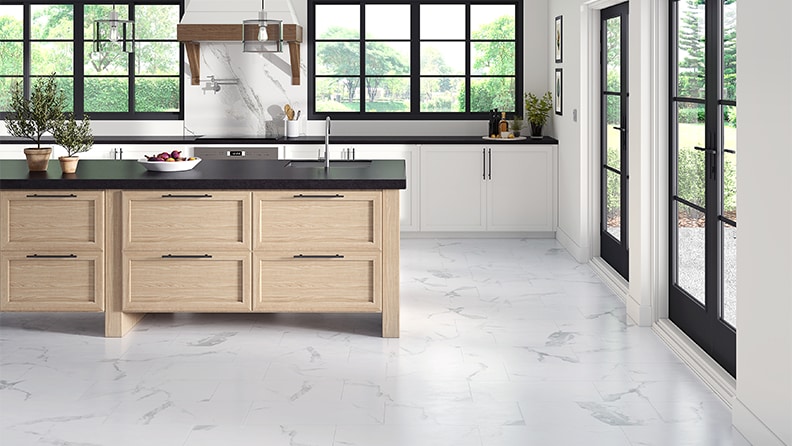
Key Differences Between Sheet Vinyl and Vinyl Tile Flooring

Sheet vinyl and vinyl tile can each be a good flooring option depending on your needs. We go into detail on the specifics of each type below, but here are the key differences when you compare sheet vinyl to vinyl tile:
- Cost: Sheet vinyl usually has a lower cost per square foot than vinyl tile.
- Water Resistance: A sheet vinyl floor has fewer seams than a vinyl tile floor, minimizing the risk of moisture damage.
- Ease of Installation: Vinyl tile can be a do-it-yourself installation. Sheet vinyl usually requires a professional.
- Ease of Repair: You can often replace individual vinyl tiles, but it can be difficult to make a sheet vinyl repair look good.
- Durability: Luxury vinyl tile (LVT), in general, is more durable and less vulnerable to scratches and wear than standard sheet vinyl and vinyl tile.
When we compare sheet vinyl to vinyl tile, we’re making general assessments. Use the information below to help you plan your flooring purchase, but always defer to the flooring manufacturer’s guide for installation, use, cleaning, etc.
What Is Sheet Vinyl Flooring?

Sheet vinyl is a type of vinyl flooring that comes in large, rolled sections. Sheet vinyl flooring is made of PVC that’s attached to a fiberglass layer and topped with a printed pattern. It’s one of the first types of vinyl flooring and is relatively inexpensive compared to the LVP and LVT flooring options. Depending on your space, sheet vinyl is a smart and inexpensive choice. Thanks to its large sheet size it limits the number of seams on the floor. Sheet vinyl is waterproof and antimicrobial, which is ideal for rooms where moisture is an issue like the kitchen, bathroom or laundry room.


What Does Sheet Vinyl Look Like?

Sheet vinyl typically comes in rolls. It can mimic just about any type of flooring, including wood planks, stone and marble. Different patterns and shades make it easy to find the perfect look to fit your décor.
Sheet Vinyl Sizes
Lowe’s sells sheet vinyl that’s 12 feet wide and cut to length. This expansive width allows you to add flooring to small, narrow rooms with few to no seams, increasing the floor’s durability and reducing install time.
What Does Sheet Vinyl Cost?
Vinyl sheet flooring typically costs from less than a dollar per square foot to $2 per square foot. The durability of the vinyl, including the overall thickness of the flooring and the thickness of the wear layer, is a major factor in the cost of the vinyl sheets.
Sheet Vinyl Water Resistance
Sheet vinyl offers fantastic water resistance since there are so few seams. Many types of vinyl sheet flooring are waterproof and suitable for bathrooms.
Sheet Vinyl Heat Resistance
Sheet vinyl doesn’t tolerate high levels of heat well, so factor this into your installation plans and the care you exercise in day-to-day activities. Heaters, sparks from a fireplace, etc. can cause damage.
How to Clean and Maintain Sheet Vinyl
Sheet vinyl is easy to keep clean. Sweep or vacuum up dirt and debris and then damp mop the floor with your favorite vinyl floor cleaner.
Sheet vinyl flooring is also easy to maintain. Avoid exposure to high heat and be careful with heavy or sharp objects that might dent or tear the material. Protect the flooring from furniture with pads and chair leg tips. Ultraviolet (UV) light from the suns rays can lead to fading over time, so use window treatments to protect the flooring. Avoid excessive moisture around any seams in the vinyl sheets.
Can I Install Sheet Vinyl Myself or Should I Hire a Pro?
Due to its size, it’s best to leave sheet vinyl installation to the pros. Handling large pieces of vinyl and applying a glue to the subfloor is a challenge if you’ve never done it before. It’s not impossible to do it yourself, but it’s not easy for a first-time installer.
Sheet Vinyl Repair
While there are benefits to a nearly seamless finish, one drawback is how challenging it is to replace a section of sheet vinyl if it gets damaged. The replacement section is often very noticeable and can stand out more than the damage.
A vinyl flooring installation in a home built in the 1980s may contain asbestos. Contact a professional equipped for the removal work. Don’t attempt to remove the flooring yourself.
Sheet Vinyl Durability
With quality, professional installation and good maintenance, sheet vinyl can last 10 to 20 years. The actual durability and lifespan depend on how rough your household is on the flooring, so if it’s getting a lot of foot traffic or if you have pets, it might show wear faster. Thicker vinyl with a thicker wear layer tends to last the longest.
What Is Vinyl Tile Flooring?

Vinyl tile is a type of vinyl flooring that comes in different sizes and shapes depending on the style and brand of tile. Vinyl tile is made of PVC that’s attached to a fiberglass layer and topped with a printed pattern or design layer that can mimic the look of standard tile, stone or even wood. A wear layer protects against scratches and scuffs. Compared to ceramic or porcelain tile, vinyl tile is a more affordable way to lend a whole new look to your flooring. Vinyl tile is easy to install, easy to clean and handles moisture-prone areas better than an organic floor choice. Vinyl tile is available as standard vinyl and the more durable luxury vinyl tile (LVT).


What Does Vinyl Tile Look Like?

Vinyl tiles can mimic the look of wood, stone, marble and tile and are also available in a range of patterns, including Moroccan styles, geometric patterns, floral designs and more.
Vinyl Tile Sizes
Just like porcelain or ceramic floor tiles, Lowe’s sells vinyl tile in a variety of sizes and shapes, with options like 10 inches by 10 inches, 12 inches by 24 inches, 18 inches by 36 inches and more. Choose the version that best fits your space.
What Does Vinyl Tile Cost?
Vinyl tile prices vary from standard vinyl tile that’s less than a dollar per square foot to LVT that’s $6 per square foot and more. As with other vinyl flooring, durability, thickness and the quality of the wear layers are factors in vinyl tile cost. LVT is usually more expensive than standard vinyl tile. Waterproof and antimicrobial qualities can add to the cost, as well as an interlocking design.
Vinyl Tile Water Resistance
While vinyl tile itself can be water resistant or even waterproof, the seams between each tile create a vulnerability when exposed to a lot of moisture. Keep this in mind when you’re deciding on what room to place the tile in, and make sure the tile is recommended for the location.
Vinyl Tile Heat Resistance
Vinyl tile can handle low levels of warmth, but high levels of heat from space heaters, drips of hot grease from cooking, etc. cause damage.
How to Clean and Maintain Vinyl Tile
To clean vinyl tile, sweep or vacuum up dirt and debris and then damp mop it with a vinyl floor cleaner. Keep moisture to a minimum.
In addition to being careful with moisture when cleaning, wipe up spills quickly before liquid can seep into the seams. Protect the flooring from heat and regular, extended exposure to direct sunlight. Be careful with heavy or sharp objects, which can tear or gouge the flooring. Use furniture pads and protective chair leg tips.
Can I Install Vinyl Tile Myself or Should I Hire a Pro?
One of the benefits of vinyl tile is how easy it is for you to install for a DIYer. Choose from tile that offers a glue-adhesive installation, interlocking installation or peel-and-stick installation based on your existing floor or subfloor. Proper preparation beforehand and the right tools (don’t forget knee pads) help. Purchase extra tiles for to account for waste when cutting and to have a few available for future repairs.
Vinyl Tile Repair
If a vinyl tile is scratched or damaged, it’s easy to remove the tile and replace it with a new one. In some cases, you might need to heat up the adhesive to make it easier to remove from the subfloor but check with the tile manufacturer beforehand.
A vinyl flooring installation in a home built in the 1980s may contain asbestos. Contact a professional equipped for the removal work. Don’t attempt to remove the flooring yourself.
Vinyl Tile Durability
With a good subfloor, correct installation and good maintenance, vinyl tile can last 10 years or more. Vinyl is resistant to stains, so it cleans up nicely. The tile holds up against foot traffic. LVT typically has a thicker wear layer, making it more resistant to traffic and scratches than standard vinyl sheets or tile. The ability to replace individual tiles can help extend the life of a vinyl tile floor, but eventually any vinyl flooring will wear out and need to be replaced.
Vinyl Flooring FAQ
Use the answers to these common questions to find the right flooring for your home.
Does Vinyl Sheet Flooring Scratch Easily?
Vinyl sheet flooring has a wear layer that helps prevent it from scratching easily with typical wear from foot traffic. However, luxury vinyl tile, which has a thicker wear layer, is more resistant to scratches.
Does Sheet Vinyl Flooring Tear Easily?
Daily foot traffic shouldn’t tear sheet vinyl, but this type of flooring is vulnerable to damage from sharp and heavy objects. You can minimize the risk of tearing by using pads and chair leg tips on your furniture and using care when moving furniture on a sheet vinyl floor.
Is Vinyl Sheet Flooring Better Than Carpet?
Flooring choices depends on several factors, including personal preference and comfort. Vinyl sheet flooring has some benefits over carpet, depending on your flooring needs. Viny sheet flooring is easier to clean, is water resistant and stain resistant and can have a slightly longer lifespan. Carpet, however, can be more comfortable and is better at dampening sound.
What Causes a Sheet Vinyl Floor to Buckle
Sheet vinyl flooring can buckle or bubble for several reasons, including poor installation, moisture under the vinyl sheet and exposure to excessive temperature changes. In addition, if the flooring is near the end of its lifespan, the adhesive might break down to the point that it no longer secures the vinyl to the subfloor.
Are Vinyl Tiles Good for Flooring?
Vinyl tile offers durability, the look of tile, wood and stone and DIY-friendly installation, making it a good flooring option for many homes. Most vinyl tile is water resistant and a good flooring type for kitchens. Some vinyl tile is waterproof and suitable for bathrooms. However, the seams in the flooring create some moisture vulnerability, so it’s best to clean up spills quickly.
What Is LVT Flooring?
LVT flooring refers to luxury vinyl tile flooring. LVT can give an attractive, more economical alternative to wood and tile flooring. LVT is more durable than standard flooring tile, giving it a comparatively longer lifespan.
Comparing Sheet Vinyl and Vinyl Tile
Sheet vinyl and vinyl tile can both create the look of wood, tile and stone floors at a lower cost, and both offer water resistance, durability and require minimal maintenance. Sheet vinyl is available in 12-foot widths while you can find vinyl tile in a variety of sizes. While vinyl tile is typically more expensive than sheet vinyl, it’s easier to install, easier to repair and more durable. LVT in particular is more durable than other types of vinyl. However, installing vinyl tile creates more seams, which can make the flooring more vulnerable to moisture.
Shop Lowes.com for vinyl flooring and compare the features, styles and wear layer durability to find flooring that works best for your home and learn about our flooring installation services. Or visit your local Lowe’s and talk to a Red Vest associate about your flooring options. They can help you understand the pros and cons of different flooring types, show you different options and help you arrange professional installation.