
Difference Between Exterior and Interior Paints
Exterior paint and interior paint have different purposes. They might be similar in color and finish options. They’re both stain and mildew-resistant and washable. But their core properties are different. Let’s break down their key differences.
Composition
Paints contain components like pigments, resin, solvents and additives. Their core difference lies in their ingredients and their proportions. Interior paints are available as water-based (latex) paints. Their main goal is to create a smooth and washable finish. The resins are more rigid to resist marks and chips.
Exterior paints can withstand harsh weather like extreme heat and rain. For a durable application, they use oil-based or acrylic resins. The additives in these paints protect against UV rays, moisture and mildew.
Durability
Interior paint is durable but focuses on resisting stains. It resists fading under normal indoor conditions.
Exterior paints are durable to withstand harsh outdoor conditions. These can include direct sunlight, heavy rain and moisture. It aims to maintain a long-lasting paint color for your home’s exteriors. It resists fading, peeling and mildew.
Color and Finish
Color and finish choices for interior and exterior paints vary. Interior paints offer a wide range of colors and finishes. You can decide which hue fits your home’s aesthetic the best.
Color options for exterior paints are diverse. But, they tend to focus on fade resistance. Flatter finishes are common for exterior paints. This is because they reduce glare and reflection. The goal here is to keep the color looking its best, even in harsh conditions.
Mold and Mildew Resistance
Mold and mildew resistance is crucial if you receive a lot of rain. This is because they thrive in damp conditions. For interior paints, mold and mildew is not the primary focus. Despite this, they do offer mildew resistance for kitchens and bathrooms.
Exterior paints are exposed to moisture and humidity. This allows for mold and mildew growth. Additives are added to exterior paints to prevent the growth of mold. This protects your home from moisture damage in any condition.
VOC Levels
VOCs are harmful chemicals that affect air quality. Interior paints have low VOC levels. You can choose low or zero VOC options for better air quality.
Exterior paints have high VOC levels to enhance durability and drying times. But, recently lower VOC options have become popular for exterior use.
Coverage
This is an important factor to consider when choosing paints. It determines how much paint you need for a project. Interior paints offer great coverage and smooth application. They require fewer coats since they provide even coverage.
Exterior surfaces tend to be porous and uneven. Due to this, exterior paints might require multiple coats for full coverage. The condition of the surface and the color can impact the coverage. These paints can cover surfaces like wood and brick. This is due to their strong adhesion properties.
Drying Time
Interior paints dry faster compared to exterior paints. The drying time depends on the brand and quality of the paint. Environmental conditions may also play a role. This allows for faster recoating and less waiting time.
Exterior paints are thick to withstand outdoor conditions. This is why they take a long time to dry. Factors like humidity and temperature affect the drying time. Exposure to sunlight can help it dry faster.
Interior vs Exterior Paints: Painting Techniques
Both interior and exterior paints aim to provide a smooth finish. But, the techniques and considerations differ vastly. Being aware of the differences between exterior and interior paints can help you get a smooth finish.
Interior Painting

Preparing your surface is the first step of any painting job. To do this, clean your walls off grease and dirt. If necessary, fill any cracks or holes in your wall. Smooth rough surfaces for better adherence. Applying a primer on new walls or walls with stains is recommended.
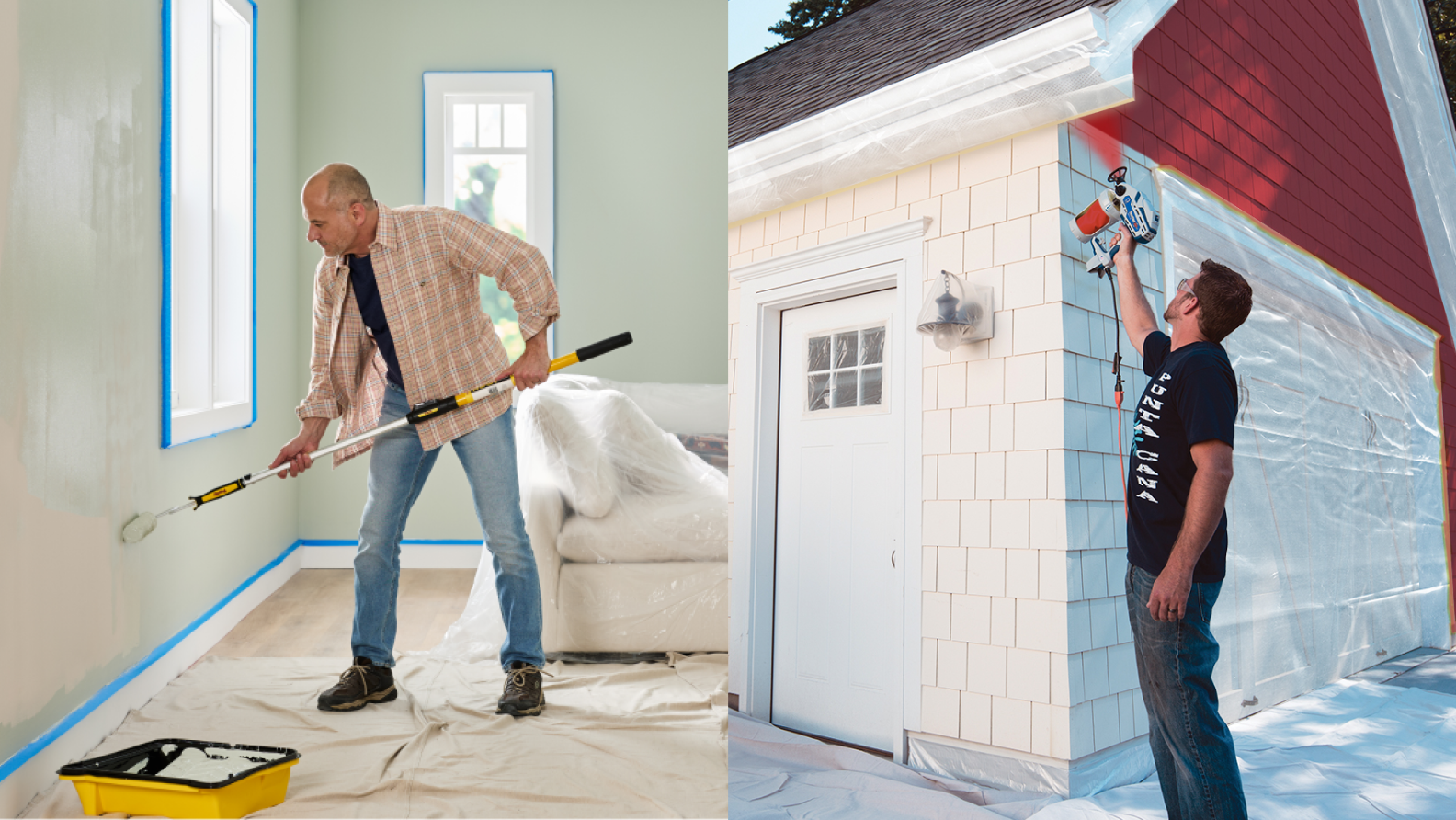
Paint rollers are commonly used for covering large walls. Paint brushes are used for corners and edges for detailed work. Good quality tools ensure better paint transfer and fewer coats. Ventilation and temperature control helps with the drying process.
The kind of interior paint you choose also depends on the surface. If your project involves only painting the walls, you can get interior wall paints. Similarly, interior door and trim paints are also available. If you decide to redo your countertops for a new look, invest in interior countertop paints and coatings.
Exterior Painting

Exterior surfaces require prep work to handle outdoor elements. Remove old paint, dirt and mold with power washing. Examine your surface for any damage like cracks, holes and rotting wood. To repair small cracks and holes in your surface, use an exterior patching compound. To do this, remove any dirt and dust from the crack, apply the compound and smooth it out. If you spot any rotted wood, cut through it to reach a solid and unaffected area. Patch the area up with a wood filler and apply a wood sealer to protect the area. Sand the repaired regions for a smooth surface and apply a primer. This is essential for better adhesion and coverage.
The surface texture and size of the area can impact tool selection. Paint sprayers cover large areas efficiently. Brushes and rollers are used for smaller areas. Since these paints are thicker, they require more effort to apply.
As with interior paints, there are specific exterior paints for different projects. Exterior house paints are ideal if you’re painting the entire exterior surface of your home. If you’re just painting your porch a fresh coat, get the deck and porch paints. Depending on the surface, you can also get masonry, stucco and brick paints for better adhesion.
Factors to Consider For Interior Paints
Consider the following factors when choosing the best paint. This helps your walls look their best.
Traffic and Longevity
The level of traffic in a room determines the paint. High traffic areas need frequent cleaning. Choosing durable paints with scrubbable finishes is helpful. This includes hallways, family rooms and kids’ play areas. Washable and smudge resistant paints are better for these conditions.
To ensure longevity in humid conditions, choose moisture resistant paints. This helps prevent peeling, bubbling or mold.
Finishes and Washability
Your paint finish impacts the room’s appeal and durability. A flat or matte finish hides imperfections and is less washable. It’s good for low foot traffic areas like bedrooms. If you prefer a soft sheen, eggshell or pearl finishes are ideal. They’re durable and easy to clean, making them suitable for most rooms.
Satin or semi-gloss finishes are highly durable, making them ideal for high traffic areas. Kitchens, bathrooms and hallways benefit from these finishes since they’re washable. Gloss finishes have great durability and washability. But, they tend to highlight imperfections. They’re often used for trims, doors and cabinets.
Primer Needs
Primer is crucial for most interior painting jobs. A primer is used for painting over dark walls with a lighter hue. It’s also used to cover stains and water damage or painting a new drywall.
Primers help with paint adhesion and hides imperfections. They provide a uniform base for your painting project. This helps create a professional finish.
Factors to Consider for Exterior Paints
The right exterior paints enhance the curb appeal of your home. It helps to protect your outdoors from weather elements.
Climate Condition
Mildew-resistant paints are essential for hot and humid weather. They should be able to withstand moisture and heat. Cold climates result in cracking and peeling of paints. Select exterior paints that have properties to withstand cold conditions.
Coastal areas deal with the problem of paint corrosion. Choose moisture and salt resistant paints to extend its durability.
Surface Material
Outdoor surfaces tend to be uneven and porous. Due to this, choosing the right paint becomes crucial. Acrylic latex paints are a durable and flexible option for wood. They’re ideal for stucco because they allow for expansion and contraction. Oil-based paints require more preparation but are also a good option for wood surfaces.
Masonry paints are great for brick since they provide better adhesion. Alkyd or acrylic paints work well with metal surfaces. Rust-inhibiting additives can extend the life of the paints.
Durability
Invest in high-quality paints for better resistance to fading and peeling. Choose lighter colors to reduce the impact of UV rays. Dark colors absorb heat and accelerate fading. Opt for mold resistant paint in areas subject to a lot of moisture.