
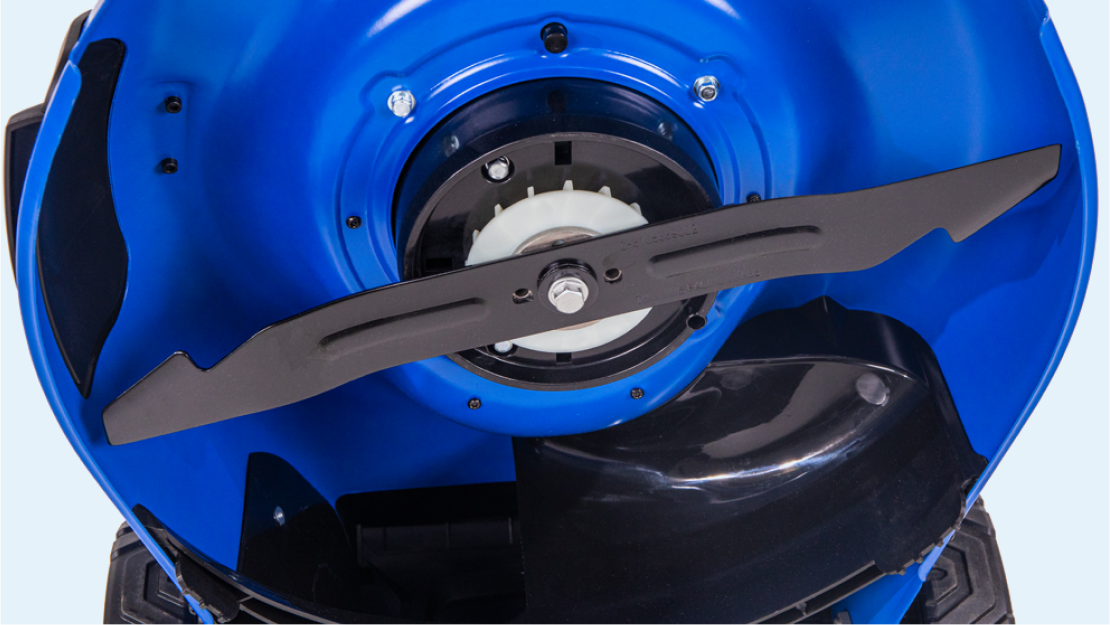
When Should You Replace Lawn Mower Blades?

If you don’t sharpen your mower blade each season, you may need to replace it every couple of years to keep it cutting cleanly. Beyond this regular maintenance, there are several situations that require a replacement blade:
- The blade is cracked or bent.
- The mower vibrates significantly during operation, indicating the blade is damaged or unbalanced.
- You’ve sharpened the blade and removed too much of the cutting surface.
- Mowing creates ragged edges on the grass blades, making the lawn more vulnerable to disease.
- Your mower manufacturer recommends replacing rather than sharpening the blade.
Inspect your mower blade regularly. If you see any damage, replace the blade before using the mower again.
How to Find a Blade That Fits Your Mower

Lowe’s makes it easy to find a new blade for your mower. When you shop at a Lowe’s store, you’ll not only see information about brand and blade length, but also icons indicating mower type and center-hole design. In a Lowe’s store, simply match your old blade to this information to find a suitable replacement. On Lowes.com you can filter the product list by these factors and more.
To find the right lawn mower blade replacement, start with your mower type. You’ll find:
There are several other factors that determine which lawn mower blades will fit your machine. If you know your mower model, you should be able to find the original equipment manufacturer (OEM) number for the blade to find a matching part. While matching a blade brand and OEM part to your existing blade is a way to ensure you get a blade that fits, you can find universal replacement blades and blades from other brands that may fit your mower.
Wear heavy-duty work gloves when handling a mower blade.
Mower Blade Measurements

There are several measurements you can take to ensure you get a blade that will work with your mower.
Center Hole Design and Diameter
Many mower blades have a circular center hole to fit the mower spindle — the part that the blade secures to. If yours does, you’ll need to know the inside diameter of the hole. Some blades use other shapes for the spindle hole. Typical shapes are:
- Round
- 5-Point Star
- 6-Point Star
- 7-Point Star
- Bow-Tie
- S-Shape
You'll also see a couple of universal center-hole designs that can fit mowers from multiple manufacturers, as well as blades with adapter kits.

Side Hole Size and Spacing
If your mower blade has small holes on either side of the center hole, you’ll need to find a replacement with side holes. It’s a good idea to record the inside diameter and the measurement from the center of one side hole to the center of the other one. However, some universal blades feature slots rather than holes to allow the blade to fit different mower models.
Blade Length
Measure your blade from one corner, diagonally across the center hole, to the opposite corner. This diagonal measurement is the blade length. Don’t simply measure from one end to the other. Knowing the size of your mower deck is also helpful since manufacturers may label blades based on the deck size they fit.
In some cases, you may need to know the blade width (from edge to edge) and thickness. If you need these measurements, take them at the flattest part of the blade.
Types of Lawn Mower Blades
Different designs give mower blades different features and capabilities. Match the blade design to your lawn and mowing habits to find the best push mower blade or riding mower blade for your landscape. You can often find blades that combine different characteristics.

Bagging Blades
The design of bagging mower blades lifts grass for more accurate cutting and efficient bagging.
- Bagging blades have a blade body that’s sharply angled to create suction.
- These blades can be effective on lawns with tall grass.
- They will raise lots of dust on lawns with sandy soil.
- Some manufacturers call these high-lift blades.

Sand Blades
Sand mower blades create a lower level of suction than bagging blades, reducing the amount of dust the mower kicks up on sandy soil.
- They aren’t angled as steeply as bagging blades.
- Lower lift means they’re best suited for discharging clippings rather than bagging.
- Some manufacturers call these low-lift blades.

Mulching Blades
Mulching mower blades have a design that circulates clippings under the mower deck and chops them into smaller pieces.
- These blades generate lots of lift, so they can be effective on tall grass.
- The lift mulching blades create means they might not be best for sandy lawns.
- Some mulching blades may have toothed cutting surfaces that chop leaves as well as grass.
- Mulching blades often work well for bagging or discharging clippings in addition to mulching.

Multipurpose Blades
Multipurpose mower blades give you flexibility in handling grass clippings.
- Most multipurpose blades are effective for mulching grass, bagging clippings and using the discharge feature on a mower.
- These blades work best if you mow your lawn regularly.

Standard Blades
Standard mower blades are generally the middle ground between high-lift bagging and low-lift sand blades.
- Standard blades are suitable for many types of mowing.
- These blades are good for thick lawns.
- They can work well on damp grass or dry grass.
- Some manufacturers call these 2-in-1 or combination blades.
Lawn mower blades are either right-hand or left-hand blades, depending on the location of the cutting surface. Most mower blades are right-hand blades, but if you want to check yours to be sure, place the existing blade flat side or lawn side down so the blade is running straight up and down. If the cutting edge on the top end of the blade is on the right side, you have a right-hand model.
Mower Blade Material
Manufacturers typically use steel for mower blades. Thicker steel will be more durable, but if a blade is too thick for the mower, the engine or motor may not be able to spin it efficiently. It’s best to choose a thickness that matches your current blade.
Changing a Lawn Mower Blade
Different mowers have different ways of securing a blade to the mower spindle, but you’ll typically need a wrench or ratchet and socket to remove an existing blade and to install a replacement. You’ll also need a blade removal tool or a block of wood to brace the blade. You may need a torque wrench to ensure you install a new blade securely.
For general instructions on changing a lawn mower blade, see How to Maintain a Push Mower or How to Maintain and Winterize a Riding Lawn Mower, but always follow the instructions from your mower manufacturer.
Sharpening a Lawn Mower Blade
Once you replace your mower blade, you’ll need to keep it sharp from season to season or replace it when it gets dull. If the edges of your grass begin to look brown and frayed, it’s time to sharpen or replace the blade. You can maintain a sharp lawn mower blade yourself with the right equipment, such as a file or a drill with a sharpening attachment and a lawn mower blade balancing tool.
Our article, How to Sharpen Your Lawn Mower Blades, will give you tips.
Some manufacturers specify replacing a blade rather than sharpening it. Follow the instructions for your mower and blade.
Replacing Your Mower Blade
Replacing a mower blade regularly ensures you’re mowing with a sharp blade that can keep your lawn looking good and help it resist disease. Lowe’s offers replacement mower blades to fit just about any mower and blade types that are suited to a variety of different lawns. You can shop by mower type, brand, center-hole design and more. If you have questions, talk to a Lowe’s associate to find the best blade for your mower and your lawn.