
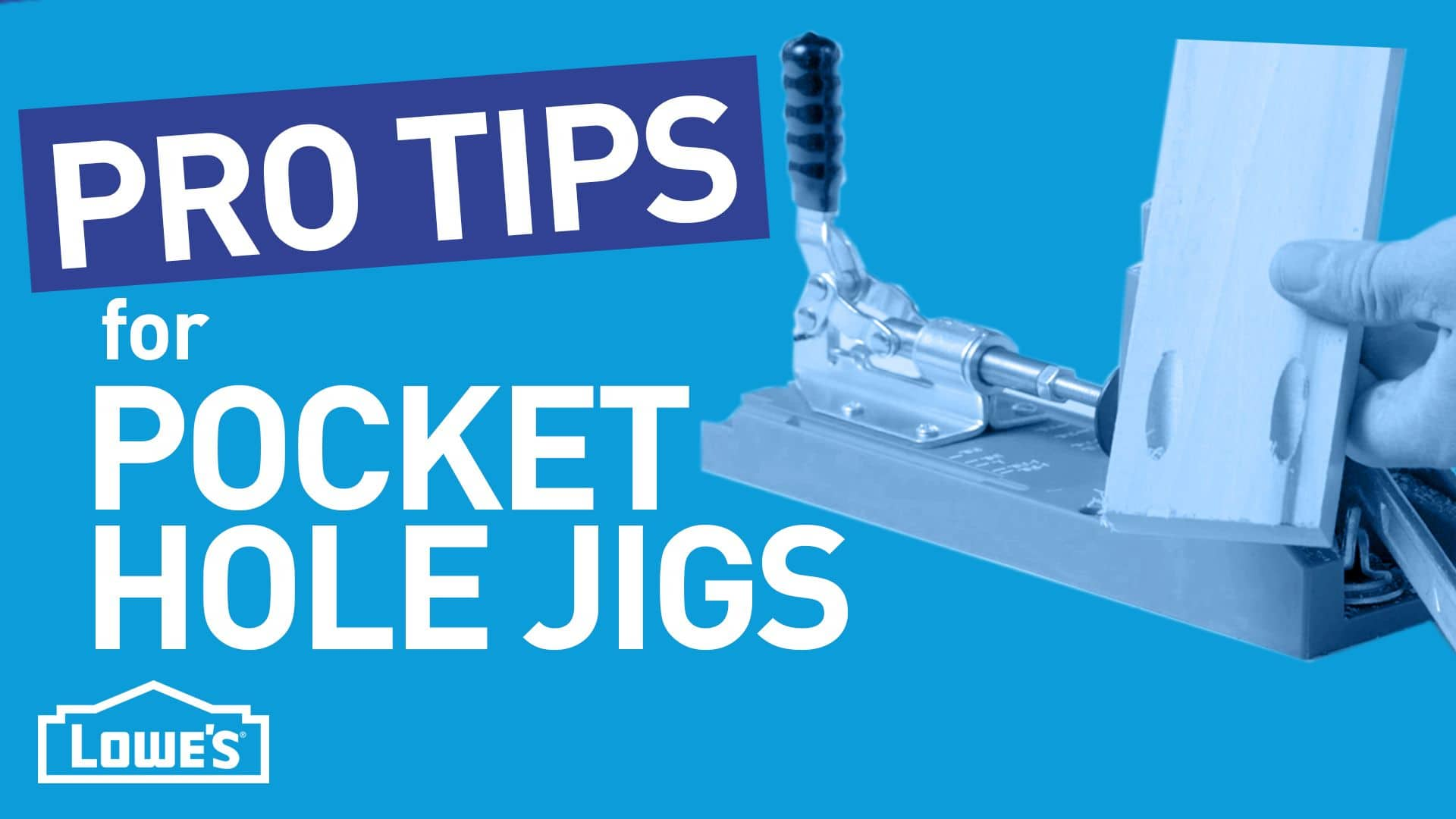
Pocket Hole Basics

Professional furniture makers have used pocket hole joinery for years ...and for good reason. It's a simple way to achieve a strong, permanent joining of two pieces of wood.
So exactly what is a pocket hole, and what's so special about it? A pocket hole is simply a hole drilled at an angle that forms a pocket for the screw. Think of it as a highly engineered toenailing technique. What makes it precise is the design of the pocket hole jig that guides the drill bit into the wood at a specific angle to produce an engineered hole to house the screw head.
After the pocket hole is drilled, a specially designed fastener is used to assemble the joints. These case-hardened screws are designed with self-drilling tips that will not split the wood when the screws are driven in, even in hardwoods such as oak and maple.
One of the advantages of pocket hole joinery is that you only need to use one clamp to complete a project — because each joint is assembled individually.
Another advantage is that there's no need to wait for the glue to dry before continuing on with your project. Once you drive the screws, the joint is permanently assembled, allowing you to continue building and giving you the opportunity to complete your project in hours rather than days.
How to Hide Pocket Holes

One of the few disadvantages of pocket holes is the visible mark they leave behind. But fortunately, there is a way to hide them. To do so, simply purchase pocket hole plugs which are designed to completely hide pocket holes or decoratively accent a visible pocket hole. Once you glue the pocket hole into place, sand or trim it flush. For the best results, choose solid wood plugs which are available in a variety of wood species including maple, pine, oak, and paint-grade.
Are Pocket Hole Joints Strong?
Though pocket hole joinery has many advantages, one if its limitations is strength. Pocket holes are considered easier and quicker to make compared to some other stronger joints like mortise and tenon. Pocket holes are similar in strength to simple joinery techniques including loose tenon and biscuit joints. If strength is of the utmost importance for your woodworking project, it’s best to stick with classic joinery techniques like mortise and tenon or dowels. If you do opt for pocket hole joinery, which can be safely used for many woodworking applications, ensure you use glue in addition to pocket hole screws. Glue plays a significant role in securely holding screws in place.
Types of Jigs

A jig is necessary for creating pocket holes. Pocket hole jigs help guide the drill to allow for the screw to make a precise connection with the wood it’s being drilled in to. Jigs range from entry-level to advanced models. Basic, entry-level options are designed with a single guide hole while upgraded models feature built-in clamps and adjustable hole guides to accommodate varying thicknesses.
Drill Bits to Use

Pocket hole bits are specially designed to work in conjunction with pocket hole jigs. They drill angled holes that will accept a pocket screw. Pocket screws are self-tapping and designed with a wide washer head.
Two Simple Steps to Wood Joinery – How to Use a Pocket Hole Jig
These two steps will allow you to create strong, professional wood joints in a fraction of the time needed with other joinery methods.
Instructions


Pocket Hole Jigs – A DIY Must-Have

Pocket hole jigs are popular with DIYers because they’re easy to use and don’t require drying time like glued joints. Though pocket hole joints are used for many applications, including building furniture and cabinetry, they’re not as strong as traditional joinery methods like mortise and tenon. To make pocket hole joints, all you’ll need is a pocket hole jig, a drill and screws. The process is simple: drill the pocket hole using the jig as your guide, align and clamp the pieces you want to join and then drive in the pocket screw to join them.