

Types of Outdoor Garden Benches
Let's explore different materials for the best garden benches:
Wood Bench

If you want to give your garden a classic look, you can choose wooden benches. These outdoor bench materials make your space look cozy. They give a warm and welcoming feel to any space.
You can choose wooden benches from the following types of wood:
- Teak
- Cedar
- Oak
- Pine
- Acacia
- Mahogany
- Eucalyptus
Pros:
- Wood benches are resistant to the color change and last a long time. Unlike plastic, the wooden benches age very slowly.
- Wooden benches can blend perfectly into your garden. It adds natural beauty to the space.
- Wooden benches can be painted to match garden decor. They are also available in different colors in the market.
Cons:
- It is a high-maintenance material as compared to others. If you are looking for a more durable option, you can opt for plastic bench or metal benches.
- Wood can also be damaged by insects and rotting. This issue does not arise with metal or plastic benches.
Metal Bench

Metal is one of the best bench materials for outdoor areas. It’s available in many styles and finishes. Metal is known for its ability to survive harsh climates.
If you plan to install metal benches, you can choose from any of the following materials:
- Stainless Steel
- Bronze
- Copper
Pros:
- Metal outdoor benches are highly durable and are also easy to maintain.
- If properly protected, benches made of metal are weather-resistant. They can withstand snow, rain and heat.
- They can also be powder coated with materials like absorbent resins to provide extra protection.
Cons:
- Since metal is hard, it may be uncomfortable to sit on without cushions. If you are looking for comfort, you should choose a metal bench with cushioning.
- A major drawback of metal benches is that they become too hot during summer. It might be difficult to sit on them when exposed to direct sunlight.
- Some metals like iron and steel are prone to rust, whereas bronze and copper are prone to discoloration.
Concrete

Concrete outdoor benches are popular because of their beautiful designs and strength. They can be a great addition to your garden. Their aesthetic appeal does not change over the years.
Concrete benches are available in the following materials:
- Cast Concrete
- Precast Concrete
Pros:
- The best part about concrete benches is that they are weather-resistant. They can handle extreme weather conditions.
- They will not corrode if they are cast properly. If they are not made well, water can seep into the concrete, which will chip or break it apart.
- Concrete is durable and does not degrade with time like other materials, for example, wood. However, they can break apart if not properly installed.
- Concrete benches are strong and sturdy. This makes the benches suitable for heavy loads.
Cons:
- They are quite heavy and hence, it is difficult to move them once installed. This limits the flexibility of moving the bench.
- You will have fewer cushioning options for these benches. Cushioning for these benches also has limited customization options.
- They can stain and crack over time. If paint spills on these benches, it will be difficult to remove it.
Plastic

One of the best materials for garden benches is plastic. Plastic benches are affordable and highly durable. These benches will not crack, peel or rot even if you leave them outdoors for months. They are available in various styles and colors.
Pros:
- Since plastic is a lightweight material, these benches can be moved easily. You can move plastic benches around depending on your requirements.
- You do not need to put any effort into maintaining them. Using a damp cloth to clean the plastic bench should be enough.
- Plastic benches are weatherproof and can be put outdoors in all seasons. They are robust to withstand conditions like snow and rain which are relatively difficult to overcome.
- Some of the plastic chairs in the market are also made from recycled plastic. For instance, you may use environmentally friendly plastic benches, which are also equally effective and long lasting.
Cons:
- These benches may change color and hence they may not be able to retain the initial color they were when purchased. One downside is that the benches can easily have their color fade especially where they are placed under direct sunlight
- They can become brittle over a few years. Overuse of plastic benches can make the material weak.
- They can feel flimsy when you use them. They might not be able to handle a lot of weight as well.
Wicker:

Wicker is one of the best patio bench materials. The woven structure of these benches makes them more stylish. It's typically made from synthetic rattan, which can resist the damage caused by weather.
Pros:
- These benches won't grow mold or mildew. Unlike other materials like wood, these benches will not rot.
- Wicker benches are lightweight. However, a steel frame might add up to the overall weight, making it difficult to move.
- Wicker benches are very comfortable to sit on. Some of them also come with cushions.
Cons:
- These benches are difficult to maintain. They must be cleaned regularly to avoid any permanent stains.
- They might split when placed in the sun for a very long time. Although some benches are UV-resistant, direct sunlight may hamper their durability.
- They are not as durable as other materials. If you are looking for durable materials, you can choose metal benches.
What to Consider When Choosing Outdoor Garden Benches
Keep an eye out for the following points when buying an outdoor bench for your home:
Purpose

Think about how you want to use the bench. For example, the seating capacity, the backdrop, decor, who you want to invite, etc.
Functionality
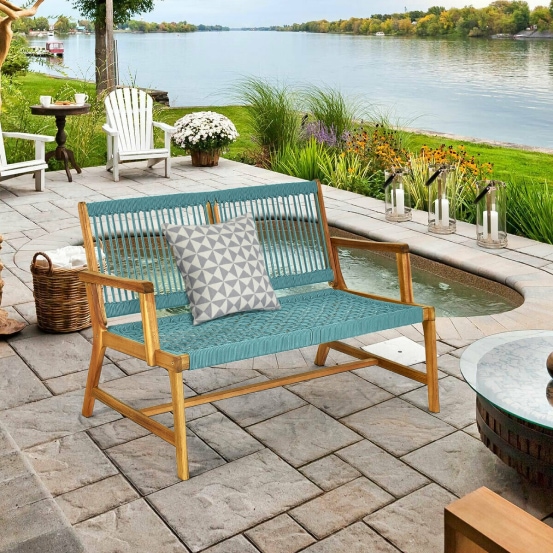
Consider the functionality that you would require in your outdoor benches. This includes comfort, seating capacity, moveability, aesthetics and stability. There is always a need to check whether that piece of outdoor furniture is compatible with the rest of the area or not.
Style

Ensure that the bench fits with the style of your home garden. It must not look strange when placed with the surrounding furniture. You can select a traditional, modern, vintage or other outdoor bench style depending on your taste of design.
Material

Select a material based on:
- How long-lasting will it be?
- How much maintenance does it need?
- What weather conditions will it be in?
Location

Select the place where you want to keep the outdoor bench. Consider the amount of sunshine, shadows and wind coming in that space. You might also add a patio umbrella for more comfort.
Size

Define the area of your outdoor space to know how much space you actually have to work with. Ensure that the bench can fit snugly without disturbing free movement. Make sure that it does not occupy your pathways.
Once you have taken into account the determining factors, you’re ready to select your outdoor bench without a second thought.